
New framework promises unprecedented level of cybersecurity for SCADA systems
An international research team developed CyberSentry, a software framework using advanced deep learning and optimization techniques to enhance cybersecurity in SCADA systems for power plants and critical infrastructure. It combines feature selection, hybrid anomaly detection, and dynamic parameter tuning to detect diverse cyberattacks with 99.5% accuracy while minimizing false alarms.
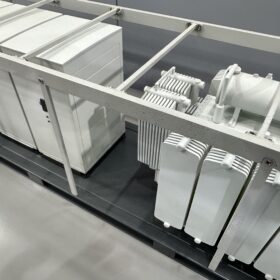
The Hydrogen Stream: Atome secures $420 million debt for Paraguay plant
Atome says it has secured a $420 million debt package for a $650 million low-carbon fertilizer project in Paraguay producing 260,000 metric tons (MT) per year, while Asahi Kasei says it has begun installing a 1 MW-class electrolyzer at Finland’s first commercial hydrogen refueling station.
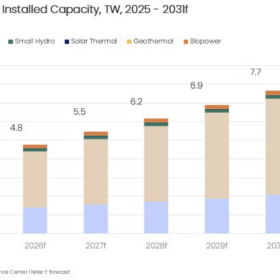
Global solar capacity to reach 6 TW by 2031, says GlobalData
GlobalData says global renewable capacity will more than double to 8.4 TW by 2031, with PV reaching nearly 6 TW, a 13% compound annual growth rate from 2025 levels of 4.1 TW.
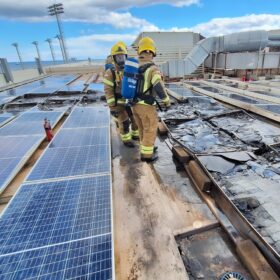
Fire hits PV-equipped sport complex in Gibraltar
Fire caused by an electrical fault from an overheated arcing cable hit the solar panels at Europa Point Stadium in Gibraltar. Firefighters contained and extinguished the blaze within 20 minutes.
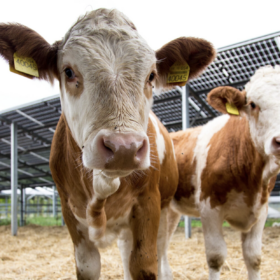
Research shows conventional solar arrays can support livestock grazing
Conventional solar parks can support sheep and cattle grazing because vegetation under and between PV modules provides adequate feed quality, according to a new research report that analyzes five installations in Germany.
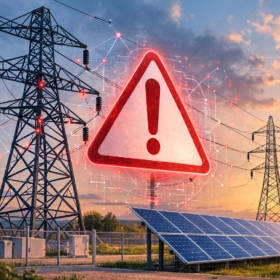
New simulation platform lets energy operators train against realistic cyberattacks
Researchers at Germany’s Fraunhofer FKIE institute developed PowerRange, a virtual simulation platform that helps power grid operators safely test cybersecurity measures and respond to realistic cyberattacks. The platform supports both traditional and renewable grids, offering immersive training across IT, OT, and control systems while highlighting the importance of coordination, communication, and practical defense strategies.
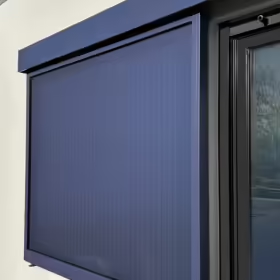
Sliding shutters integrate PV for building facades
German manufacturer Ehret has launched SolarSlide, a sliding shutter with integrated PV modules developed with the Fraunhofer Institute for Solar Energy Systems (Fraunhofer ISE). It provides solar shading while generating electricity for residential and commercial facades.
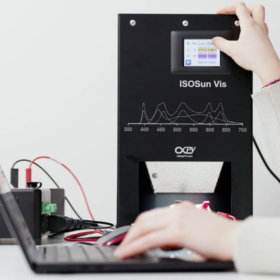
InfinityPV releases new compact solar simulator
The Danish company says its new product is ideal for small to medium-sized solar cell testing. It can simulate light conditions in the 390–700 nm range.
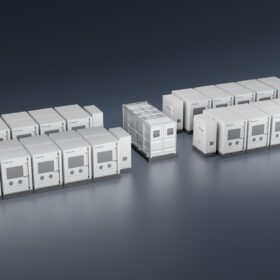
Cubenergy launches FlexCombo 2.0 flexible energy storage block
The FlexCombo 2.0 is an AC Block designed to support the evolving requirements of power systems, including grid stability, regulatory compliance, and scalable project development.

Beazley to acquire kWh Analytics to expand renewable underwriting
Beazley has agreed to acquire US renewable insurance specialist kWh Analytics to strengthen data-driven underwriting for solar and energy storage projects.
