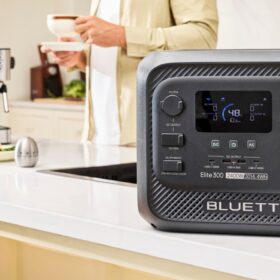
Bluetti launching Elite 300, world’s smallest 3 kWh portable power station
The Bluetti Elite 300, packing more power than ever into a small form, will be available with early-bird discounts from March 8.
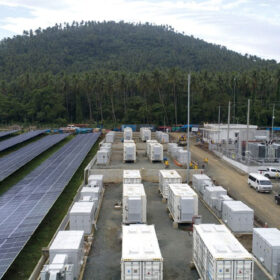
Philippines mandates energy storage for renewables plants over 10 MW
Department of Energy (DOE) order sets out new rules for mandatory energy storage, including a minimum capacity of at least 20% of the generating plant’s installed capacity. DOE also calls for energy storage systems (ESS) installations to have grid supporting capabilities, such as grid-forming inverters to help stabilize voltage and frequency.

Growatt debuts high-voltage battery for residential, small C&I solar
The APX HV Battery 2.0 supports 5–30 kWh capacities and up to 15 kW of output. The IP66-rated system features a stacked, cable-free design.
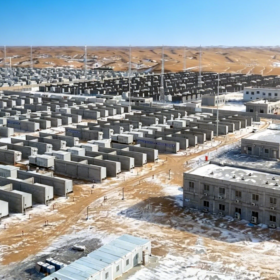
Vanadium flow and lithium-ion combine in world’s largest grid-forming hybrid storage plant in China
China brings online 300 MW/1,200 MWh grid-forming energy storage facility in Inner Mongolia, integrating lithium-ion and vanadium flow battery technologies.
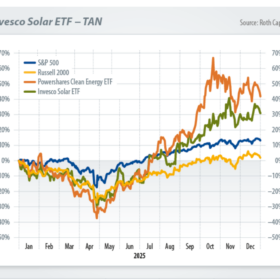
The future of solar is unwritten
Whatever decision the U.S. Department of Commerce makes on polysilicon imports, some market segments are in for a bumpy ride in 2026 as the expiration of tax credits and other policy levers change the trading environment faced by residential installers and others. Jesse Pichel and Lev Seleznov of Roth Capital assess what lies ahead for U.S. solar.
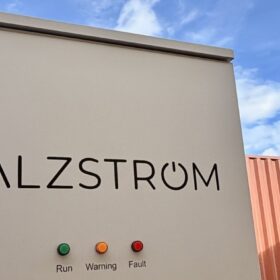
Austria’s Salzstrom unveils sodium-ion storage system for commercial applications
The new SALT 110 battery storage system from the Vienna-based company has a usable capacity of up to 110 kWh. The storage system is reportedly capable of 6,000 charge cycles at a depth of discharge of 95%.

SolarPower Europe issues due diligence guide for PV-BESS
SolarPower Europe has released new technical due diligence guidelines for utility-scale solar-plus-storage projects, covering risk, engineering and lifecycle standards for co-located PV and battery systems.
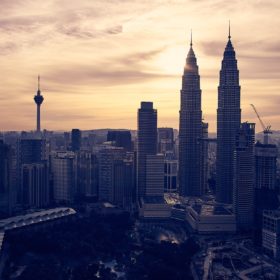
Malaysia restricts non-AI data centers, citing energy concerns
Malaysia’s prime minister Anwar Ibrahim said future policy will ensure domestic consumers and the electricity grid are protected amid the country’s data center expansion. This could include leveraging the ASEAN Power Grid project to cover any supply shortfalls.

Fraunhofer IEE calls for ‘grid-forming readiness’ in distribution networks
Germany’s Fraunhofer Institute for Energy Economics and Energy System Technology IEE (Fraunhofer IEE) says in a new position paper that large-scale battery storage systems in medium-voltage grids should be technically prepared for future grid-forming operation, aiming to bridge the gap between current regulations and potential system stability requirements.

AlphaESS releases containerized C&I storage system
The Chinese manufacturer said its Aster TB250/TB500 system is compatible with both 40 0V and 800 V PV systems. Parallel connection allows scaling up to 3 MW / 8.46 MWh.
