
The impact of land slope on agrivoltaics feasibility
Brazilian scientists have developed a slope-based framework for agrivoltaics, finding that sites below 15% gradient offer the best balance between agricultural suitability and technical feasibility. Their review of 30 studies shows that steeper terrain can host PV systems with adapted designs, land-use limits, erosion risks, and rising installation costs.

SALD launches large area sheet-to-sheet tool for perovskite solar pilot lines
The Dutch spatial atomic layer deposition equipment manufacturer has launched a new sheet-to-sheet tool for pilot production of large area perovskite solar devices on glass substrates.

The new rationale of the EU PV Market
In its first monthly column for pv magazine, the Becquerel Institute explains how solar PV continues its global expansion despite political uncertainty and market turbulence. In Europe, 2025 was a record year — but the underlying dynamics are becoming increasingly complex.
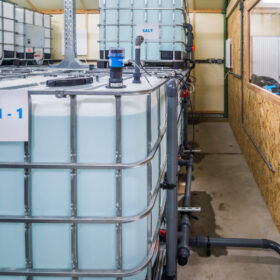
Long-duration storage as an antidote to grid congestion, renewables curtailment
RenewaFLEXNL, a three-year Dutch initiative led by TNO, aims to accelerate long‑duration energy storage (8–100 h) to reduce grid congestion and better integrate renewable energy. pv magazine spoke with the project coordinator, Iraxte Gonzalez Aparicio, about diverse storage technologies, real-world applications, regulatory guidance, and energy management system tools to support large-scale solar‑plus‑storage deployment in the Netherlands and beyond.

Agrivoltaics? Yes in my vineyard
Researchers in Spain surveyed 238 wine tourists in the Murcia region and found broad support for trellis-integrated agrivoltaics in vineyards, with 94% backing solar integration and most respondents seeing no landscape conflict.
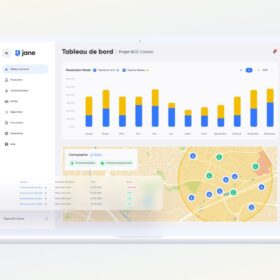
French startup launches app to boost collective self-consumption
French startup Jane Energie has introduced a software platform to automate and manage collective self-consumption projects, targeting 100 kWp to 500 kWp installations as the segment moves from feed-in tariffs toward shared local consumption models.
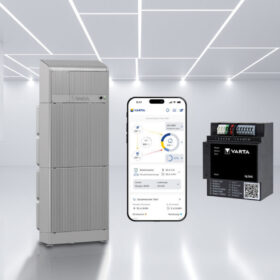
Varta unveils residential battery with AI-driven energy management
The Germany battery manufacturer is expanding its portfolio with a modularly scalable LFP storage solution featuring a new energy management system. The new product comes with the company’s proprietary “Varta.iq” software, which is designed to detect consumption anomalies, integrate dynamic electricity tariffs, and enable bidirectional charging.
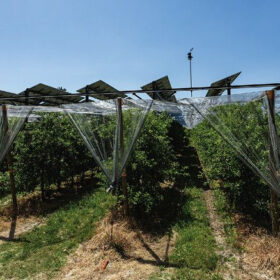
Scientists say land-preservation costs should be factored into agrivoltaics’ LCOE calculations
German researchers found that agrivoltaics costs far exceed agricultural benefits, raising doubts about subsidies and highlighting the need for more cost-competitive system designs.
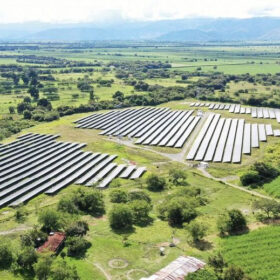
Colombia deploys 333 MW of PV in 2025
The country’s cumulative installed PV capacity reached 1.59 GW at the end of December, according to new figures released by the Colombian administrator of the wholesale energy market.
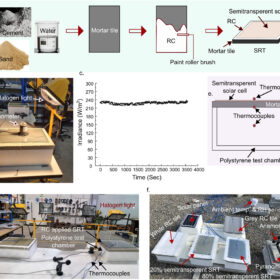
New reflective coating increases BIPV power output by 11%
Australian researchers developed a low-cost reflective coating for semi-transparent solar roof tiles that lowers surface temperatures by up to 20 C and boosts power output by up to 11.7%. Simulations across five global cities showed energy savings of up to 5.85%, highlighting the coating’s strong potential for improving both building cooling efficiency and solar performance in BIPV systems.
