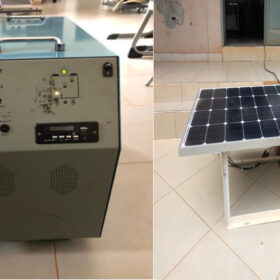
Field manual for off-grid residential PV in remote communities
A research team has constructed a technical field audit among users of solar systems in remote communities in Ghana and has identified some recurring technical issues. Based on the collected data, the scientists have also developed a practical field manual.

Enphase Energy, Octopus Energy announce smart tariff for UK customers
In an update to the two companies’ strategic partnership, Octopus customers with Enphase solar and battery systems can now benefit from a smart import and export tariff designed to save money on electricity bills.
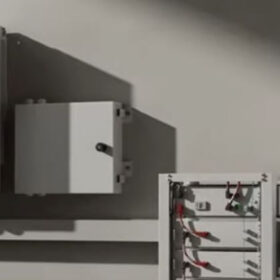
Solis unveils generator-compatible hybrid inverters
Solis has introduced its Solarator series hybrid inverters in India, targeting the residential and commercial solar storage markets.

EMPA develops biodegradable fungi battery
A team from the Swiss Federal Laboratories for Materials Science and Technology (Empa) has developed a 3D-printed battery. Fungi are used as anode and cathode with one releasing electrons during metabolism and the other able to absorb them.
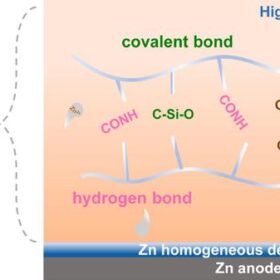
High-voltage, super-stable sodium–zinc hybrid batteries
Researchers from the China University of Petroleum have synthesized a novel hydrogel electrolyte that, when paired with a Prussian blue cathode, achieves outstanding energy density and cyclability in sodium-zinc hybrid ion batteries.
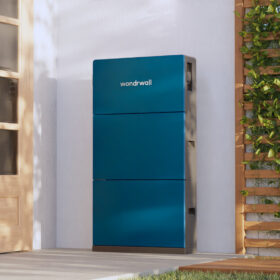
Wondrwall debuts residential AI-based battery
UK startup Wondrwall has developed a hybrid battery-inverter system for homes, offering up to 25.6 kWh of energy storage capacity.

Solar-driven brine management system for hydrogen, chlorine production
Researchers have developed a novel energy system comprising PVT panels, reverse osmosis, reverse electrodialysis, and proton exchange membranes. The proposed setup can purportedly produce 18.78 kg/day of hydrogen and 120.6 m³/day of freshwater.
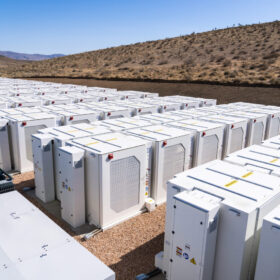
Moldova launches tender for 75 MW of battery storage
The procurement aims to improve the reliability of Moldova’s grid, facilitate energy trade with neighboring Romania and Ukraine, and support the integration of locally produced renewable energy.
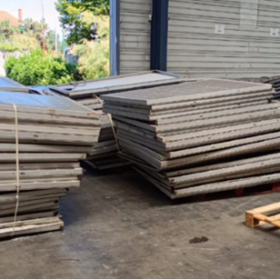
European consortium reuses second life PV panels, EV batteries in agrivoltaics, plug-in solar, low-budget projects
A European team is developing technologies and processes to show how end of life PV panels and electric vehicle (EV) batteries can be used in three distributed energy market segments: agrivoltaics, plug-in PV for households, and low-budget solutions. It will also demonstrate efficient recycling processes for critical raw materials recovered from panels and batteries that cannot be reused.

China’s new energy storage capacity surges to 74 GW/168 GWh in 2024, up 130% YoY
In 2024 alone, China added 42.37 GW/101.13 GWh of new storage capacity (excluding pumped hydro), with an average discharge duration of 2.3 hours—up from 2.1 hours in 2023.
