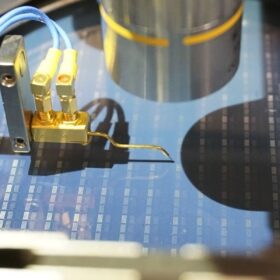
New SWIR line-scan camera for silicon PV quality control
France’s New Imaging Technologies has launched a short-wave infrared line-by-line scanning camera for high-definition and high-performance silicon PV inspection systems.

Trina Solar reveals 841 W perovskite-silicon tandem PV module prototype
China’s Trina Solar has unveiled a perovskite‑silicon tandem solar module prototype delivering 841 W and 27.1% efficiency, based on 210 mm tandem cells.
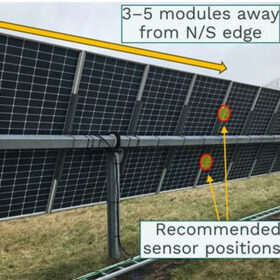
New approach to measure rear plane-of-array irradiance in bifacial PV plants
Researchers in Denmark claim to have identified the best locations for rear plane-of-array irradiance sensors on the back of single-axis trackers in bifacial PV projects. Their work suggests how to reduce sensor quantities while maintaining accurate performance monitoring.

INA Solar to build 3 GW cell production line in India
INA Solar is building a 3 GW solar cell manufacturing line in central India, as part of a broader expansion that includes 4 GW of module capacity and aluminium frame production. It aims to begin construction by the first quarter of 2026 and start operations by mid-2027.
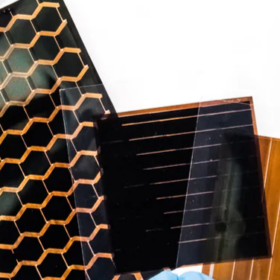
German startup offers protic ionic liquids for perovskite solar cell production
Solaveni, a German fine chemical manufacturer, is commercializing protic ionic liquid materials that reportedly enable more stable, water-based halide perovskite inks suitable for use in scalable thin film manufacturing processes.
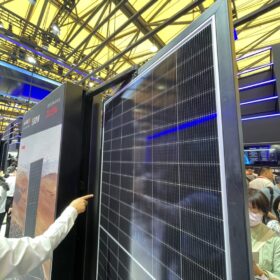
Chinese PV Industry Brief: Snapshots from SNEC 2025
Solar manufacturers signed an estimated 15 GW of module sales and supply deals at SNEC 2025 PV Expo in Shanghai last week. Major contracts included JinkoSolar’s 1.75 GW order for Saudi Arabia’s SPPC project and JA Solar’s 2 GW agreement to support solar manufacturing in India.

Dutch startup offers roof coating increasing PV safety
AllShield Coatings says that its fire-resistant product can be installed under a new roof covering or applied to the roofing material of existing roofs. It weighs 2.8 kg/m2 and reportedly serves as an effective fire-resistant layer, significantly reducing the risk of fire spreading.
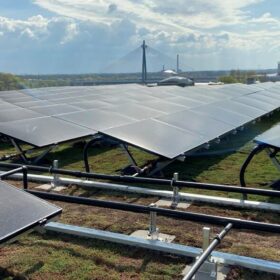
Stadium in Austria now hosting Europe’s largest PVT system
Austria has installed Europe’s largest photovoltaic-thermal (PVT) solar system at a stadium, using Sunmaxx modules combined with geothermal energy and brine heat pumps to provide climate-neutral electricity and heat.
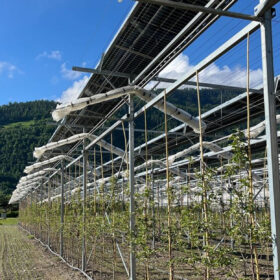
Agrivoltaics for cherries
Switzerland’s Energie360° and solar tech specialist Insolight have agreed to build a 1,300-panel agrivoltaic plant on a cherry farm in Leuggern, Switzerland. The facility will combine crop protection and dynamic light management.

JA Solar, ARTsolar agree to expand PV module manufacturing in South Africa
JA Solar has set up a manufacturing partnership with South Africa’s ARTsolar to annually produce 340 MW of PV modules, supporting domestic content rules under South Africa’s procurement programs and reducing reliance on imports.
