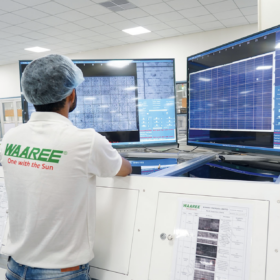
India’s Waaree Energies posts monthly solar module output above 1 GW
Waaree Energies says its record November output underscores the scale and reliability of India’s expanding solar manufacturing base as global demand intensifies.
California study finds electrification can ease electric rate pressures
A new analysis from the Public Advocates Office of the California Public Utilities Commission (CPUC) says large-scale adoption of electric vehicles and heat pumps could moderate rate increases if grid upgrades are delivered efficiently.

European Commission publishes new grid rules and plans to accelerate interconnection projects
The European Union’s executive body sets out plan to more closely link the energy systems of EU member states, including commitment to fast-track key interconnector projects. Proposals have been welcomed by leading solar and energy storage trade bodies. The move comes as several EU nations lag 15% interconnection target set for 2030.

GCL Technology forms $287 million entity to buy stake in Chinese rival
GCL Technology Holdings has set up a CNY 2.06 billion ($287 million) partnership to acquire a 42.5% stake in Inner Mongolia Xinyuan Silicon Material Technology, in a move that may point to emerging consolidation in China’s polysilicon sector.

Snapsun introduces rooftop mounting system made of recycled plastic
The French mounting system provider offers an 8 kg rooftop PV system made from recycled plastic. The system reportedly simplifies installation and reduces strain, with integrated cable guides and clip-on connectors that support panels up to 1,180 mm.

DMEGC launches framed solar module weighing 7.5 kg/m2
In response to the growing demand for solutions for low load-bearing roofs, Chinese manufacturer DMEGC is presenting an IEC-certified lightweight 460 W module at France’s largest PV trade show – EnerGaïa.
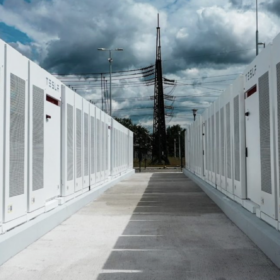
Poland shortlists 183 energy storage projects for EU funding
Poland’s state environmental fund says developers sought PLN 28 billion ($7.7 billion) for 20 GW and 122 GWh of storage projects – nearly seven times the program’s budget, with 183 projects eligible for funding.
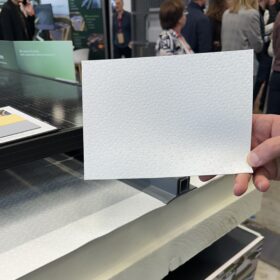
Renolit showcases reflecting cool roof membrane for bifacial rooftop PV
Renolit France has introduced the Alkor Bright reflective membrane for bifacial rooftop PV systems, offering high solar reflectivity and durability for flat or pitched roofs. The membrane helps keep buildings cooler while boosting the energy output of bifacial solar modules.
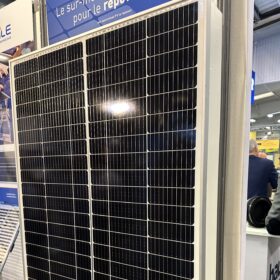
France’s S’tile offers custom PV modules for repowering, revamping
S’tile has launched fully customized solar modules for repowering and revamping rooftop PV systems, providing exact-fit replacements or higher-output upgrades tailored to each project.

Indonesia’ Pertamina to build 50 MW flexible PV production line in Indonesia
PT Pertamina Power Indonesia and HyET Solaris Netherlands are planning to construct a 50 MW pilot factory manufacturing the Dutch company’s lightweight and flexible PV products in Indonesia, with ambitions to scale-up to a GW-size manufacturing facility.
