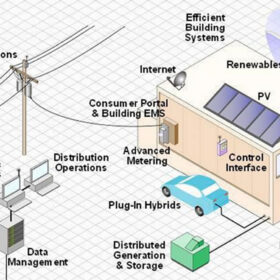
Industry 4.0 technologies raise cyber risks for smart renewables grids
An international research team developed a multi-stage intrusion detection system that uses supervised and unsupervised AI techniques to detect and mitigate cyber threats in smart renewable energy grids. The system can reportedly achieve high accuracy, low false positives, and real-time detection, outperforming traditional intrusion detection system models.
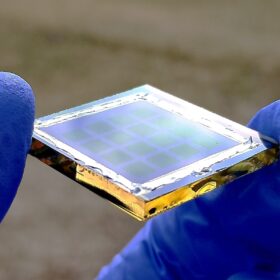
Swedish scientists build bifacial chalcogenide solar cell with 15.1% efficiency
Researchers in Sweden developed a bifacial chalcoprite solar cell using a titanium-doped indium oxide (ITiO) back contact, achieving 68% bifaciality. The device is able to maintain strong front-side performance with around 15% efficiency, 595 mV open-circuit voltage, and 75% fill factor.”
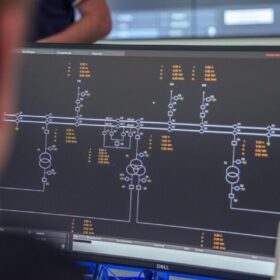
Germany classifies cybersecurity threats for energy infrastructure
Germany’s Federal Network Agency will use a new, structured framework developed by Fraunhofer IOSB-AST to classify cybersecurity incidents in the energy sector. The methodology enables comprehensive risk assessments, from initial reports to systemic and economic impacts, supporting consistent evaluation across the entire energy value chain.
Austria deploys 1.63 GW of solar in 2025
Austria’s photovoltaic market slowed in 2025, with around 1,634 MW of new capacity installed, bringing the country’s total PV capacity to approximately 9.9 GW.
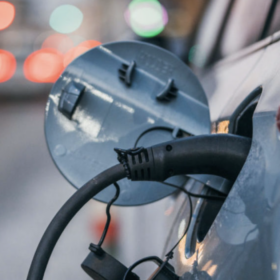
German pilot shows 700 EVs can provide redispatch services
TransnetBW says its pilot with Octopus Energy shows 700 electric vehicles can deliver grid flexibility within existing redispatch processes, with potential to scale to gigawatt-hour levels.
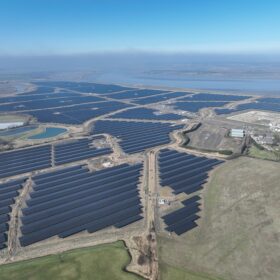
UK solar deployment hits 22 GW as more large projects commissioned
Government data reveals 2.5 GW of new solar added in 12-months period, the fastest pace for a decade. Deployment expected to accelerate as pipeline of utility-scale projects grows and subsidy support for residential installations kicks in.

Croatia to invest €40 million in household solar, batteries, heat pumps
The Croatian government’s latest set of energy support measures includes new financing for residential solar, batteries and heat pumps, expected to support up to 15,000 applications, as well as an extension of existing electricity price subsidies for homeowners.

SMA Solar Technology confirms wider loss for 2025 on weak PV market
SMA Solar Technology AG says revenue declined slightly and losses widened significantly in 2025 due to weak demand and one-off effects from its restructuring program.
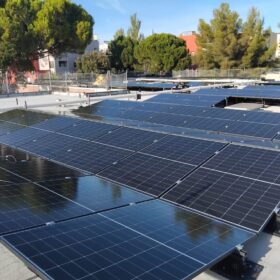
France lowers PV feed-in tariffs for systems up to 100 kW
France’s energy regulator has reduced feed-in tariffs (FITs) for PV systems up to 100 kW for the April to July 2026 period, with lower rates across all segments and reduced compensation for surplus electricity.
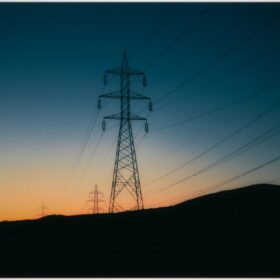
Spain enables 50-plus renewable plants for real-time voltage control
Spain’s grid operator Red Eléctrica and regulator CNMC have launched real-time voltage control services, allowing renewable energy installations to provide dynamic grid support under a new regulatory framework.
