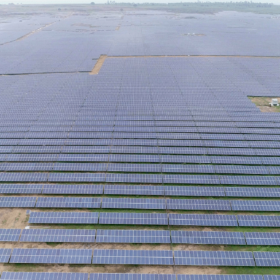
India’s solar potential estimated at 10.8 TW
A new study by the Energy and Resources Institute (TERI) has estimated India’s total solar potential at 10,830 GW, significantly higher than the previous 2014 assessment of 748 GW by the Ministry of New and Renewable Energy (MNRE). The study revisits conventional solar deployment areas such as barren and unculturable lands and explores additional avenues to expand the country’s solar potential.
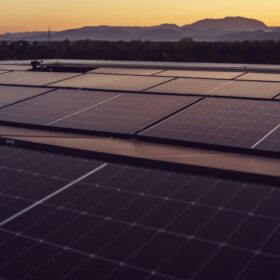
Zambia invests $40 million in solar for schools, hospitals
Zambia has launched a $40 million investment under its Presidential Solar Initiative to install solar systems at 209 public institutions, including schools and hospitals.

Hungary’s solar capacity nears 8 GW
Data from transmission system operator MAVIR shows that solar energy production in Hungary reached a new peak on June 13, producing enough energy to serve the country’s domestic electricity requirements entirely from renewables.

Netherlands allocates 1.8 GW of PV in latest round of SDE++ program
The Netherlands has awarded 1.79 GW of solar capacity under its 2024 SDE++ renewable energy subsidy scheme, including 1,237 MW of ground-mounted projects, 448 MW of industrial rooftop systems, and 107 MW of floating installations.
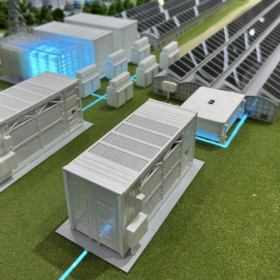
Romanian utility launches 70 MWh storage tender
Electrica S.A. Group said the tender also includes the construction of a 110 kV/MV electrical substation.

Scientists see potential for 3,000 PV-powered methanol sites in Europe
Researchers have analyzed the potential implementation of green methanol from CO2 capture in existing industries, based on European GIS data. While they found 9,213 theoretically viable municipalities, the number fell to 3,016 when considering the space needed for a PV installation around the plant.
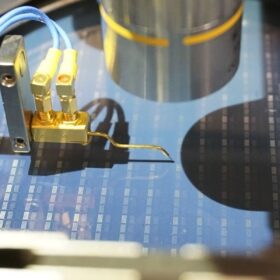
New SWIR line-scan camera for silicon PV quality control
France’s New Imaging Technologies has launched a short-wave infrared line-by-line scanning camera for high-definition and high-performance silicon PV inspection systems.
Tender opens for solar solutions in Ukraine
The United Nations Development Programme (UNDP) has launched a tender for the provision of solar solutions in Ukraine. The deadline for applications is July 8.

Germany deploys 1.1 GW of PV in May
Germany installed 1.1 GW of new solar in May, bringing total installations for the first five months of 2025 to 5.97 GW, slightly below the 6.16 GW added over the same period in 2024.

Spanish grid operator claims power outage originated from solar plant
Beatriz Corredor, president of Spanish grid operator Red Eléctrica de España (REE), said a fault at a PV plant in Badajoz, Spain, triggered a forced frequency oscillation that led to a recent blackout. She said the plant has been “perfectly identified.”
