
Croatia’s solar capacity reaches 1.1 GW
Croatia’s solar market continues to grow steadily, led by the self-supply and commercial and industrial (C&I) segments, while regulatory barriers stall utility-scale development.
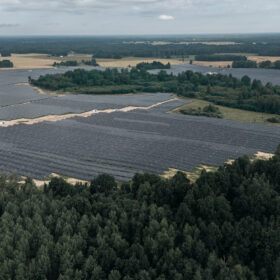
Latvia switches on 94 MW of solar
Ignitis Renewables has started commercial operations at the 94 MW Vārme solar farm in western Latvia. The project is one of the country’s largest PV installations to date.
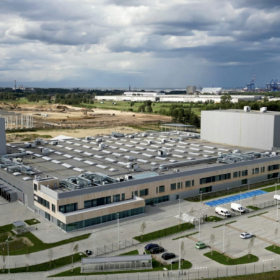
Lyten to buy Northvolt assets with $200 million for BESS push in Europe
Lyten has raised an additional $200 million to accelerate its efforts to become a main player in Europe for its battery energy storage systems (BESS), following its earlier acquisition of a plant in Gdansk, Poland.

Solitek launches anti-glare black bifacial solar modules
Lithuania’s Solitek has launched full-black 425 W bifacial solar modules with matte, satin-textured glass for glare-sensitive sites such as airports, road barriers, and buildings.
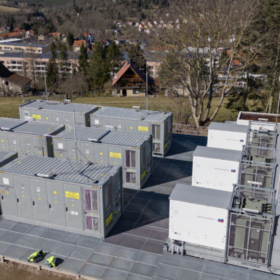
New battery maker builds Czech factory with European software
Partners from Germany and Czechia are building a battery storage production line in eastern Czechia, integrating in-house control systems to improve cybersecurity and reduce reliance on Chinese infrastructure.
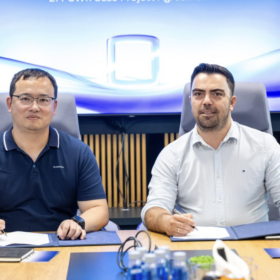
Sunotec, Sungrow partner on 2.4 GWh of battery storage in Europe
Sunotec says it will deploy Sungrow battery energy storage system (BESS) tech across co-located solar projects in Bulgaria and wider Europe.

Kyrgyzstan signs 1.9 GW solar deal
Kyrgyzstan’s Ministry of Energy has signed an agreement with Vietnam’s Rox Energy Global and RECA LLC to develop a 1.9 GW solar project. The installation is scheduled for completion in 2027.

Romania adds over 900 MW of solar in H1
Romania is on track for record solar deployment in 2025, driven by subsidies for residential and commercial and industrial systems and a more favorable framework for utility-scale development.
Dual PV module cooling tech based on water, air
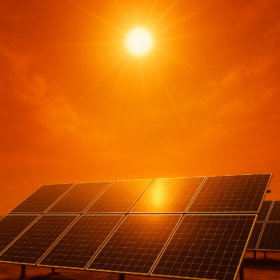
Scientists in Hungary have built an experimental rig that uses a 60 W polycrystalline solar panel with 152 holes drilled into its frame for air cooling, as well as high-conductivity copper alloy pipes and fins placed on its back for water cooling.
Lithuania expands energy storage scheme amid overwhelming interest
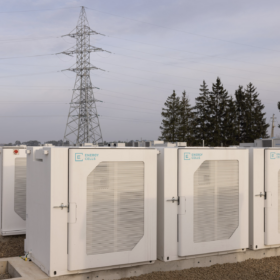
The Lithuanian Ministry of Energy and Environment has approved additional funding for its energy storage procurement program after strong interest from potential beneficiaries. Meanwhile, Trina Storage has secured the first 180 MWh of battery projects in the country under its new gigawatt-hour-scale battery energy storage system (BESS) portfolio in the Baltics.
