
New intrusion detection systems boost protection of SCADA systems against cyber threats
An international reserch team developed two deep learning-based IDS models to enhance cybersecurity in SCADA systems. The hybrid approach reportedly improves detection of complex and novel cyber threats with high accuracy, adaptability, and efficiency, outperforming traditional methods across multiple datasets.

Saudi Arabia adds around 7.8 GW of solar in 2025
Saudi Arabia had a record year for solar deployment last year, taking cumulative capacity past 12.4 GW. GlobalData is forecasting annual deployments to increase in the coming years but notes that they remain behind the pace required to meet the country’s target of 130 GW of renewables by 2030, instead nearing the goal by 2035.

New framework promises unprecedented level of cybersecurity for SCADA systems
An international research team developed CyberSentry, a software framework using advanced deep learning and optimization techniques to enhance cybersecurity in SCADA systems for power plants and critical infrastructure. It combines feature selection, hybrid anomaly detection, and dynamic parameter tuning to detect diverse cyberattacks with 99.5% accuracy while minimizing false alarms.
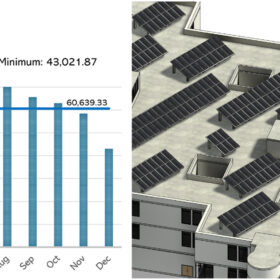
The impact of azimuth angles on PV power production in Saudi Arabia
Researchers in Saudi Arabia conducted a year-long simulation of fixed-tilt PV panels at different azimuth angles, finding that south-facing panels (180°) maximize energy production, while up to 45° eastward shifts cause minimal losses.
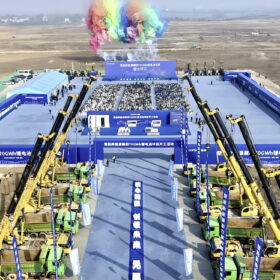
Cornex secures 11.5 GWh of battery orders from Saudi Arabia, Egypt
The Chinese manufacturer will supply 5.5 GWh of energy storage products to Saudi Arabia and another 6 GWh to Egypt, as it works to expand its global footprint.

Saudi Arabia could hit net-zero emissions by 2060, with 151 GW of solar
Saudi researchers outlined pathways for Saudi Arabia to reach net-zero power sector emissions by 2060, requiring up to 3.6% of land – mostly for onshore wind – with 151.3 GW of solar PV covering only 0.16% of the country.
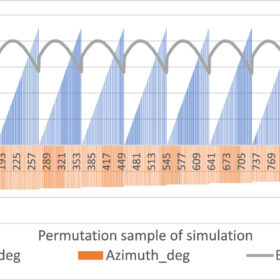
The optimal fixed tilt, azimuth angles for bifacial PV in Saudi Arabia
A new bifacial PV optimization model for 18 Saudi Arabian cities identifies optimal tilt and azimuth, showing rear-side irradiance can boost annual energy yield by 8–12 % and shifts tilt 3°–11° higher than monofacial modules. The framework validates previous studies, highlights high- and low-performing locations, and serves as an early-stage planning tool before detailed project simulations.

Scientists achieve 32.6% efficiency in perovskite-silicon tandem solar cell via interface engineering
Researchers from KAUST, TU Delft, and LMU Munich have improved the performance of monolithic perovskite-silicon tandem solar cells by modifying the physical structure at the front of the bottom heterojunction solar cell.
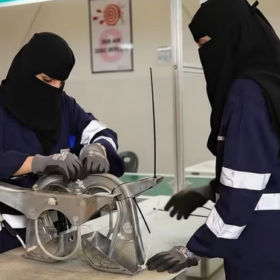
Nextpower, Abunayyan to build 12 GW solar tracker factory in Saudi Arabia
The factory will be located in Jeddah and supply solar trackers across Saudi Arabia and the MENA region.
The Hydrogen Stream: RWE commissions 100 MW hydrogen electrolyzer
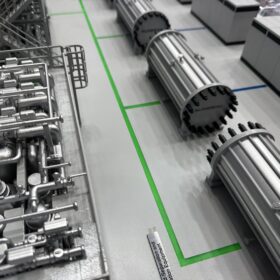
RWE has started commissioning a 100 MW electrolyzer in Germany to supply renewable hydrogen under long-term contracts, while Hydrogen Utopia International and Hydrogen Systems are advancing plans to build waste-to-hydrogen plants in Saudi Arabia.
