
Slovenia allocates €16 million for solar energy communities
Slovenia has set aside €16 million ($16.7 million) to support solar energy communities, requiring projects to include at least 100 kW of PV capacity, with or without storage. The program will run until 2027.
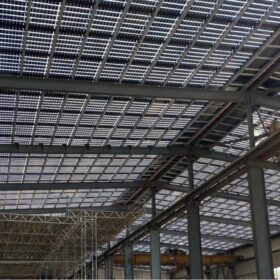
Swiss startup launches 400 W transparent BIPV panels
Climacy, a building integrated PV manufacturer, has launched a new semi-transparent 400 W glass-glass panel that is suitable for use in roofs or facades in residential, industrial and commercial buildings. When used as a roof or wall componentt, the 20% transparent panels reportedly allow more natural light into interior spaces than conventional PV designs.
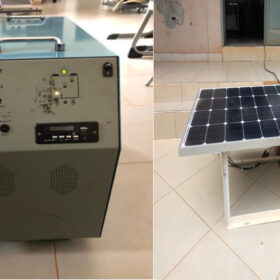
Field manual for off-grid residential PV in remote communities
A research team has constructed a technical field audit among users of solar systems in remote communities in Ghana and has identified some recurring technical issues. Based on the collected data, the scientists have also developed a practical field manual.
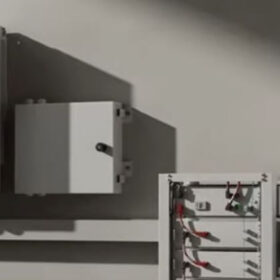
Solis unveils generator-compatible hybrid inverters
Solis has introduced its Solarator series hybrid inverters in India, targeting the residential and commercial solar storage markets.

Switzerland installs 1.78 GW of PV in 2024
Switzerland’s cumulative installed solar power reached around 8 GW at the end of December 2024, following 1.78 GW of new capacity additions for the year.

Why and where solar PV succeeded in Arab Gulf states
A US-UAE research team has investigated how regulatory regimes impacted solar power deployment across six Arab states of the Persian Gulf. Their findings show that the predominant role of the state is expected to continue.
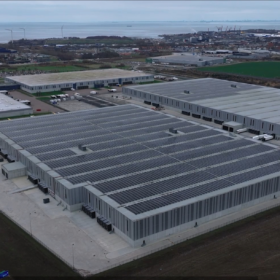
Scandinavia’s largest rooftop PV plant goes online
Scandinavia’s largest rooftop PV plant, a 14 MW array in Landskrona, Sweden, has gone online. The system, consisting of 24,000 JinkoSolar modules, was installed on a warehouse roof by Danish transport company DSV.
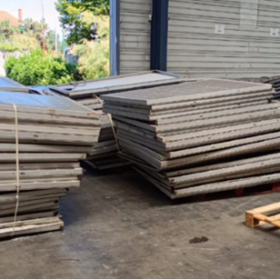
European consortium reuses second life PV panels, EV batteries in agrivoltaics, plug-in solar, low-budget projects
A European team is developing technologies and processes to show how end of life PV panels and electric vehicle (EV) batteries can be used in three distributed energy market segments: agrivoltaics, plug-in PV for households, and low-budget solutions. It will also demonstrate efficient recycling processes for critical raw materials recovered from panels and batteries that cannot be reused.

Spain’s rooftop PV installations hit 1.18 GW in 2024
UNEF, Spain’s PV association, says developers installed 674 MW of industrial PV in 2024, alongside 207 MW in the commercial sector and 275 MW of residential solar installations.

Roofit.Solar releases new BIPV panels with narrow roof coverage
Estonia’s Roofit.Solar has developed new building-integrated photovoltaic (BIPV) panels with an effective width of 470 mm, offering power outputs of 120 W or 180 W.
