Top News
Global solar additions reached record 511 GW in 2025, says IRENA

Chinese researchers report 700 Wh/kg lithium-metal battery
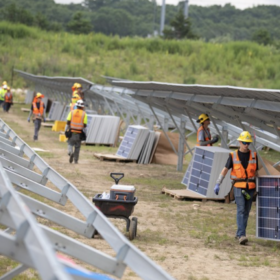
US solar faces 53,000-worker gap ahead of 2026 deadline
Out now - pv magazine Global April Issue
The new pv magazine Global issue is out now!
Available in print and digital – get your copy today!

pv magazine Awards 2026
It’s time to submit your application!
Entries for the pv magazine Awards 2026 are now open from April 1 to August 31 across seven key categories: Modules, Inverters, BESS, BoS, Sustainability, Manufacturing, and Projects.
Don’t miss your chance to showcase your innovation globally.
Your monthly PV industry update
pv magazine’s global monthly edition offers authoritative reporting, market-driven analysis, and expert perspectives on the technologies, policies, and investments transforming global power systems.
Available in print and digital

New Date - SunRise Arabia Clean Energy Conference 2026
Join the 3rd SunRise Arabia Clean Energy Conference on September 30, 2026, in Riyadh to explore how solar PV and energy storage are powering the Kingdom’s growing digital economy — including data centers. Secure your spot at the early-bird rate.

Join our ticketed webinar on April 29, we will unpack the incident in detail and offer practical strategies to prevent the cyberattack.
Regular price: 99.00 EUR net.

Special Edition KEY Rimini 2026
On the occasion of KEY Rimini 2026, pv magazine is publishing a special edition on the latest developments in the Italian photovoltaic market.
Content available in Italian.

pv magazine Focus 2026
On 24 June, pv magazine Focus 2026 delivers expert insights on bankable BESS projects and optimized energy management for residential and C&I applications across Europe.
Sign up for our free pv magazine newsletters
With our free daily newsletters, you will receive the latest solar and storage news directly in your inbox

Media Kit 2026
Bookings for 2026

Amplify your brand presence with the leading trade media platform for the solar and storage industry.
Sonnen cuts prices for large residential battery products
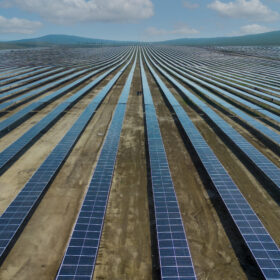
TotalEnergies, Masdar to merge renewables activities in nine Asian countries
Midea unveils PV-compatible indoor heat pump for space-constrained residential applications
Pexapark logs more than 1 GWh of European storage PPAs in March
South Africa’s Eskom extends small-scale solar registration fee waiver
Press Releases
TOPCon Shows an Average 3.16% Performance Gain Over BC
Forbes China Recognizes Fox ESS as a 2026 Leading Enterprise in Renewable Energy
Nature Sustainability Publishes LONGi Founder Li Zhenguo’s Article: Photovoltaics for food security
Korea’s Green Energy Expo to Open April 22 in Daegu, Spotlighting Solar, Storage and Hydrogen
Opinion & Analysis
Featured
Solar above 60° North: The Arctic as PV’s next frontier
DIY plug-in solar shows $0.65/W potential in US market
Achieving a system cost of $0.65/W through the secondary market and do-it-yourself assembly demonstrates a viable pathway for US plug-in solar to provide immediate utility bill relief to renters and apartment dwellers.
Agrivoltaics with trackers, vertical systems offer economic upside
An industry analysis argues that agrivoltaic systems using trackers or vertical designs can outperform conventional solar on both revenues and land use, challenging conclusions from a recent German study.
‘Be kind to yourself and patient with your journey’
This week Women in Solar+ Europe gives voice to Irene Mihai, Policy Director at the Romanian Photovoltaic Industry Association (RPIA). She says her personal experiences show how mentorship, collaboration, and inclusive workplace practices are essential for attracting and retaining talent while empowering the next generation to contribute to a sustainable future.
What are the selling points of marine energy?
Marine energy is renewable and generally predictable. It could thus compensate for the unplanned intermittency of solar and wind generation, its proponents argue. But several challenges still need to be overcome for the energy to become widely used.
Solar generation performance with regional weather conditions deviating from long-term averages
Global solar PV continues its rapid growth, reaching around 650 GW in 2025, with record solar irradiation extremes across regions such as East Asia, India, and Latin America. With current production capacity and emerging technologies like perovskite-silicon tandem modules, PV is poised to surpass all other electricity generation technologies combined by the end of the decade.
Markets & Policy
Featured
Australia’s Transgrid shortlists 2 GW of batteries for NSW grid
Longi launches integrated solar-plus-storage platform strategy
China-based solar manufacturer Longi is shifting from a multi-vendor system design to a unified solar-plus-storage architecture built around in-house technologies.
US adds 26.6 GW of solar in 2025 as renewables dominate
Solar and wind accounted for nearly 90% of all new utility-scale generating capacity added to the US grid through December 2025, according to the Federal Energy Regulatory Commission (FERC).
Key takeaways from Chile’s Re+ Cono sur
Chile’s Energy Minister Ximena Rincón called for a more proactive approach to renewables, storage, and electrification at the RE+ Southern Cone Summit last week, highlighting the need to reduce fossil fuel reliance and invest in enabling infrastructure.
BBDF 2026: How financing standalone vs. co-located projects really works
The “lab” session at Battery Business & Development Forum 2026 made transparent how different stakeholders evaluate and view energy storage projects between standalone and co-located options, and where views diverged.
Solar Fabrik launches 400 W red-brown module for heritage roofs
Solar Fabrik has introduced a 400 W red-brown glass-glass PV module designed to meet strict aesthetic requirements for historic and protected buildings, offering a 20.02% efficiency and compatibility with traditional tiled rooftops.
Installations
Featured
Abu Dhabi extends solar self-supply policy to residents
Grid bottlenecks threaten 120 GW of planned renewables in Europe
Latest analysis from Ember finds major grid bottlenecks in transmission and distribution networks across Europe, threatening the viability of both future utility-scale and smaller-scale residential solar in the most impacted countries.
Tracker-based agrivoltaics turn fields into wind-safe zones
Cornell University researchers demonstrated that tracking solar panels in agrivoltaic systems can protect crops from wind damage while allowing airflow, outperforming traditional single-row tree windbreaks. They also proposed a new lowered-first-row panel design that improves wind protection, achieving up to 86% reduction in shelter-zone wind speeds under extreme conditions.
US small-scale solar hits record 1.9 GW in Q4 2025
Distributed solar accounted for 15% of all new US power capacity in 2025, as residential and community projects reached record installation levels.
Middle East conflict lifting PPA valuations, says Pexapark
Swiss analytics firm Pexapark says the latest developments in the Middle East are having a visible effect on long-term power purchase agreement (PPA) valuation in Europe, as the market begins to reprice the coming years.
EU energy regulator opens consultation into PPA market
The European Union Agency for Cooperation of Energy Regulators (ACER) is running a public consultation on the evolution of the bloc’s power purchase agreement (PPA) market to identify existing initiatives and challenges.
Technology
Featured
UNSW study finds tracker-based PV systems experience higher UV degradation than fixed-tilt arrays
Germany’s heat pump public discourse is positive but volatile
Research from Germany analyzed sentiment in online news coverage to explore how heat pumps are portrayed in German public discourse. It found that while public perception is generally positive, it is neither uniform nor stable, and dipped significantly during debates around Germany’s heating law in 2023.
Can sodium-ion storage drive energy flexibility in France?
France’s Association Environnement Juste has proposed a storage mandate for renewables projects exceeding 10 kWp in order to integrate flexibility at the source. The association argues European sodium-ion batteries could present an economically and environmentally viable solution, capable of stabilizing grids without depending on imported metals.
Solbian launches solar kit for boat davits
Available in 80 W and 108 W versions using high-efficiency SunPower Maxeon cells, the kit offers wind resistance up to 25 m/s and easy installation on unused boat surfaces, according to the manufacturer.
SolarEdge outlines path to 800 V (DC) data center infrastructure
SolarEdge has outlined a transition pathway to integrated 800 V (DC) infrastructure for data centers, arguing that legacy alternating current (AC) systems introduce inefficiencies that could constrain the growth of AI workloads. It says rising compute demand and next-gen NVIDIA GPUs are increasing urgency, while data centers lose an estimated 10% to 30% of input power through multiple conversion stages.
Ion beam technology offers pathway to low-defect silicon solar cells
Researchers in India demonstrated that ion beam implantation enables precise boron doping in silicon solar cells, reducing defects and improving charge transport. The proposed approach could support more efficient and reproducible p–n junctions, offering a pathway to higher-performance silicon photovoltaics.
Manufacturing
Featured
Sassmann develops ‘solar panel grid’ for pigeon protection
UNSW unveils new ageing method to assess TOPCon solar module degradation
UNSW researchers developed a chemically selective, nitrate-based, single-sided accelerated ageing method for TOPCon solar cells that replicates the mildly acidic environment inside EVA-encapsulated modules. The proposed approach enables rapid, physically meaningful screening of front-side metallisation stability, reliably predicting module-level degradation and reducing development time and costs, according to its creators.
Extensive testing validates reuse of 23-year-old second-life polycrystalline solar modules
Researchers in Brazil tested second-life polycrystalline PV modules for two years and found they retained 87–88% of their original power, with minimal degradation and stable performance. Despite strong sustainability and circular economy benefits, economic incentives remain limited due to the declining cost and short warranties of new state-of-the-art silicon PV modules.
JinkoSolar drops Vietnam solar manufacturing project
JinkoSolar has formally terminated its 4 GW Hai Ha solar cell project in Vietnam, citing US antidumping duties that undermined its export economics. The company will maintain other Vietnamese operations while shifting focus to localized supply chains and Asia-Pacific and Middle East markets.
Premier Energies commissions 5.6 GW solar module facility in India
Premier Energies Ltd has commenced trial production at its 5.6 GW solar module manufacturing facility in Seetharampur, Telangana. The new facility produces G12R TOPCon modules with zero busbar (0BB) architecture.
IFC loans $125 million for polysilicon factory in Malaysia
The International Finance Corporation is providing an A Loan to Malaysian polysilicon producer OCI TerraSus that will partly finance the development of a semiconductor-grade polysilicon production facility in Sarawak, Borneo.
Energy Storage
Featured
BBDF: German network agency to release BESS grid fee framework soon
BBDF 2026: Finance, tolling, and getting the merchant balance right
As Europe prepares to roll out 200 GWh of battery storage over the next five years, discussion at the Battery Business & Development Forum 2026 turns to how financing models are rapidly shifting. Bankers, developers and stakeholders shared key pain points with the audience, as well as practical advice.
Azerbaijan commissions 500 MWh battery storage project
Azerbaijan President Ilham Aliyev has inaugurated a major battery energy storage system (BESS) project as part of a 500 MWh rollout to strengthen grid stability and support renewable energy integration.
BBDF 2026 Opening Session: Optimism, caution, and grid fees
Investors at the Battery Business & Development Forum (BBDF) 2026 signaled continued confidence in the energy storage market, while warning that regulatory uncertainty, particularly around grid fees in Germany, could affect project economics and investment decisions.
Italy targets 16 GWh storage auction under MACSE scheme
Italy’s energy regulator ARERA has approved a proposal from the Ministry of the Environment and Energy Security to target 16 GWh of storage capacity in the 2029 MACSE auction, while urging caution on final volumes to reflect existing pipeline capacity.
Lithuania’s solar capacity surpasses 3 GW
Lithuania added approximately 600 MW of solar last year, taking total capacity to 3,040 MW. Technical permits have been issued for an additional 4 GW of solar but with grid congestion becoming a primary constraint, future deployments will be increasingly dependent on integration with storage technologies.