Top News
Repowering key for Japanese solar assets approaching feed-in tariff expiry
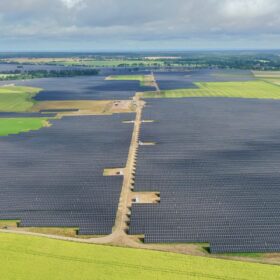
First PV plant operating in Poland’s balancing market
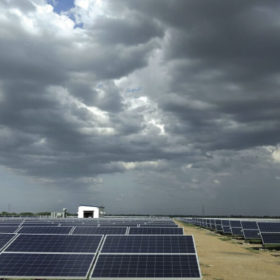
Abaxx Exchange lists world’s first solar irradiance futures contract
Out now - pv magazine Global April Issue
The new pv magazine Global issue is out now!
Available in print and digital – get your copy today!

pv magazine Awards 2026
It’s time to submit your application!
Entries for the pv magazine Awards 2026 are now open from April 1 to August 31 across seven key categories: Modules, Inverters, BESS, BoS, Sustainability, Manufacturing, and Projects.
Don’t miss your chance to showcase your innovation globally.

Your monthly PV industry update
pv magazine’s global monthly edition offers authoritative reporting, market-driven analysis, and expert perspectives on the technologies, policies, and investments transforming global power systems.
Available in print and digital

New Date - SunRise Arabia Clean Energy Conference 2026
Join the 3rd SunRise Arabia Clean Energy Conference on September 30, 2026, in Riyadh to explore how solar PV and energy storage are powering the Kingdom’s growing digital economy — including data centers. Secure your spot at the early-bird rate.

Join our ticketed webinar on April 29, we will unpack the incident in detail and offer practical strategies to prevent the cyberattack.
Regular price: 99.00 EUR net.

pv magazine Webinar
pv magazine Webinar
pv magazine Webinar
pv magazine Webinar
Special Edition KEY Rimini 2026
On the occasion of KEY Rimini 2026, pv magazine is publishing a special edition on the latest developments in the Italian photovoltaic market.
Content available in Italian.

pv magazine Focus 2026
On 24 June, pv magazine Focus 2026 delivers expert insights on bankable BESS projects and optimized energy management for residential and C&I applications across Europe.
Sign up for our free pv magazine newsletters
With our free daily newsletters, you will receive the latest solar and storage news directly in your inbox

Media Kit 2026
Bookings for 2026

Amplify your brand presence with the leading trade media platform for the solar and storage industry.

Peru opens complementary services market to support renewables

Rethinking silver paste design for TOPCon, LECO solar cells
Botswana breaks ground on 500 MW solar-plus-storage project
Work begins on Zambia’s largest solar-plus-storage project
PV curtailment exceeds 3.8% in Spain over past nine months
Press Releases
Swatten Strengthens Its Emerging Market Presence at Canton Fair with Grid-Grade Energy Solutions for Africa
Deye Residential ESS Secures Key JET and ECHONET Lite Certifications, Powering Japan Market Expansion
Growatt Strengthens Its Position at RE+ Mexico 2026 with a Comprehensive Portfolio of Energy Solutions
WHES at CLNB 2026: Powering the Green Transition for Non-Ferrous Metals
Opinion & Analysis
Featured
Will we finally buy European PV modules?
‘I approach inclusion from a perspective of fairness and performance’
This week Women in Solar+ Europe gives voice to Carla Vico, CEO of France’s Green Solver. She says building an inclusive culture means valuing people for their work, accountability, and commitment, rather than their gender or background. “I do not believe in positive discrimination; I believe in creating equal opportunities and making merit-based decisions,” she states.
China polysilicon hits cost floor as producers curb output amid weak demand
In a new weekly update for pv magazine, OPIS, a Dow Jones company, provides a quick look at the main price trends in the global PV industry.
Cyclones and unseasonal polar winds shape Australia’s solar resource in March
In a new weekly update for pv magazine, Solcast, a DNV company, reports that March in Australia was unusually wet and disrupted, with frequent tropical cyclones, polar air intrusions, and repeated low-pressure systems causing widespread cloud, storms, and record cold in the southeast. Solar irradiance was mixed: below average in the south due to persistent cloud and storms, but near or above average on some northern and coastal regions where breaks between systems allowed recovery.
PV module prices continue to rise unabated
Photovoltaic module prices have risen for the fourth consecutive month, driven by strong demand for energy independence despite falling upstream costs such as polysilicon. At the same time, production cuts in China and tighter supply conditions are limiting availability, reinforcing price increases across all technologies.
Managing cyber risks in the era of decentralized energy
The move toward decentralized energy resources offers resilience and flexibility in power generation, but it also introduces new complexities that demand proactive security measures.
Markets & Policy
Featured
No evidence of PFAS leaching from solar panels, study finds
SolarEdge targets C&I with new all-in-one battery
SolarEdge has a new commercial focused battery system, with the new model scaling up to as high as 1 MW / 4 MWh depending on the inverter choice.
Key takeaways from RE+ Mexico
Expo ER+ 2026 in Guadalajara highlighted Mexico’s accelerating photovoltaic and energy storage market, with strong industry participation and a clear focus on grid integration and digitalisation. Experts emphasized that future growth will depend on storage and transmission expansion.
Kosol Energie completes 142 MW solar project for Coal India
Located in the Indian state of Gujarat, the ground-mounted solar plant uses n-type TOPCon bifacial modules based on POE–POE encapsulation technology.
Inside PV Manufacturing: United Solar’s polysilicon factory in Oman
In the first article of a new series on solar manufacturing facilities around the world, pv magazine presents the polysilicon facility of United Solar in Oman. The plant has a production capacity of 100,000 metric tons per year and is currently the largest of its kind outside China.
A closer look at EcoFlow’s three-phase Ocean 2 storage solution
Ocean 2 brings a more versatile large-scale and expandable, modular home storage solution, capable of handling both small and large solar PV input.
Installations
Maldives’ largest floating solar array goes online
The world added 605 GW of new PV capacity in 2025, says IEA
Latest report from the International Energy Agency says last year’s 600 TWh increase in solar PV was the largest-ever electricity generation increase by any source in one year, outside of periods of post-crisis recovery.
How to operate PV-driven residential heat pumps under time-varying tariffs
Researchers in the United Kingdom developed a scheduling model for residential heat pumps that reduces electricity costs while maintaining thermal comfort under dynamic tariffs and uncertain rooftop PV generation. It optimizes when to use grid power, PV energy, and building thermal storage.
Bangladesh opens public land to utility-scale solar under PPP model
Bangladesh has introduced a new regulatory framework to develop utility-scale solar projects on land owned by public agencies, with the Bangladesh Power Development Board acting as the contracting authority.
European electricity prices increase despite falling gas prices
AleaSoft Energy Forecasting’s latest analysis finds the weekly average electricity price was above €95 ($111.70)/MWh last week in all major European markets except France, Portugal and Spain. These three countries each set new records for solar energy production for a day in April last Friday, recording 145 GWh, 26 GWh and 213 GWh respectively.
UK tries to break gas link with voluntary long-term fixed price contracts for all renewables
UK solar plants without fixed-price contracts will be offered voluntary long-term fixed-price agreements under a new “Wholesale Contracts for Difference” regime from 2026. The policy seeks to reduce exposure to volatile wholesale prices driven by gas.
Technology
Featured
U.S. startups announce partnership to offer domestic perovskite-silicon tandem solar modules
Fabricating perovskite solar cells with robotic boxes
An international research team has developed an AI-driven robotic platform that autonomously designs, fabricates, and optimizes perovskite solar cells, completing the full experimental workflow in a closed-loop system. Using the platform, the researchers fabricated and tested more than 50,000 devices, achieving efficiencies of up to 27%.
Tandem PV launches commercial perovskite-silicon manufacturing in California
Tandem PV has opened a 40 MW commercial demonstration factory in Fremont, California, marking a significant transition for perovskite-silicon technology from laboratory development to repeatable manufacturing at scale.
Rongke Power debuts 2 MW/8 MWh vanadium flow battery storage system
The Chinese company says the new product targets long-duration storage, grid support, and GWh-scale deployment.
Negative power prices reach all-time high on the Iberian Peninsula in Q1
Spain and Portugal recorded a surge in negative electricity prices in Q1, driven by strong solar generation and relatively low demand on the Iberian Peninsula. Further records are likely in 2026 as solar capacity grows, with more frequent price volatility expected across Europe.
Jinko Power enters data center business with 1 GW project in China
Jinko Power signed a framework agreement with Zhongwei to develop a 1 GW data center in Ningxia, marking its entry into green computing under China’s “Eastern Data, Western Computing” initiative. The project, however, remains subject to approvals and funding scrutiny.
Manufacturing
Featured
TBEA launches 500 kW string inverter
JinkoSolar debuts rooftop PV module weighing 7 kg/m2
The Chinese manufacturer said its lightweight Light Diamond TOPCon module delivers 560 W at 24.94% efficiency.
Cyber threats for PV: What are supply chain attacks and how do they work
Supply chain attacks compromise PV systems by targeting trusted vendors, software, or hardware components, allowing attackers to infiltrate systems indirectly through legitimate channels. These attacks can disrupt operations, introduce hidden vulnerabilities, and impact multiple assets at once, making vendor security and system validation critical for resilience.
Perovskite–silicon tandem solar cells using zinc-doped tin oxide achieve comparable performance to indium tin oxide counterparts
Fraunhofer ISE-led researchers demonstrated zinc-doped tin oxide (ZTO) as an indium-free alternative to indium tin oxide (ITO) for recombination layers in fully textured perovskite–silicon tandem solar cells. ZTO delivers comparable device efficiencies of 27–28% under current-matching conditions, offering a scalable, indium-free pathway for high-performance tandem photovoltaics without efficiency loss.
Trina Solar TOPCon patents invalidated in US ruling involving Canadian Solar
The U.S. Patent and Trademark Office has invalidated all claims of two TOPCon solar cell patents previously asserted by Trina Solar against Canadian Solar subsidiaries.
Spray cooling for floating PV
A research team in Germany developed a dynamic model of spray cooling for floating PV systems that couples thermal behavior, electrical performance, and active cooling, and validated it against a 750 kW installation. Simulations across four climates showed that spray cooling reduces module temperatures by up to 42% and improves energy yield by up to 3.8%, with benefits strongly dependent on local conditions.
Energy Storage
Featured
Control, not capacity, could be the next driver of US residential storage investment
California powers its massive water pumps with 105 MW solar project
California is putting the sun to work on the heavy lift that keeps California hydrated.
A closer look at CATL’s new sodium-ion battery
The battery manufacturing heavyweight presented its latest sodium-ion products at ESIE 2026 earlier this month, expanding its push into grid-scale storage, AI data centers, and long-life applications.
Samsung launches residential air-to-water heat pump reaching SCOP of up to 4.9
The Korean manufacturer said its new heat pump system can achieve a seasonal coefficient of performance of up to 4.9 under low-temperature floor heating conditions, and approximately 3.78 under higher-temperature operation at 55 C.
Low-pressure hydrogen bridges seasonal gaps in solar-powered Japanese building
Taisei Corporation has demonstrated that a building can operate entirely on solar power by combining PV generation with a hybrid storage system integrating batteries and low-pressure hydrogen at a test facility in Yokohama. An EMS-enabled setup using lithium-ion batteries and PEM electrolysis balanced short- and long-term energy supply and demand, enabling year-round renewable operation, according to the company.
Could global warming improve heat pump efficiency in Alpine regions?
Researchers in Italy analyzed air-to-water heat pump performance in Alpine regions, focusing on how start-up and defrost cycles affect efficiency under current and future climate conditions. Their simulations show that while warmer temperatures slightly reduce defrosting losses and modestly improve efficiency, start-up cycling losses remain significant and continue to limit overall performance gains.