Top News
IFC loans $125 million for polysilicon factory in Malaysia
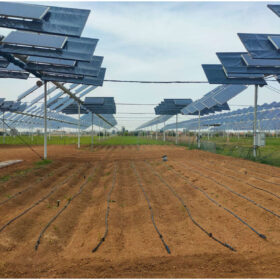
Multi-year field study finds that agrivoltaics can support healthy potato yields

Lithuania’s solar capacity surpasses 3 GW
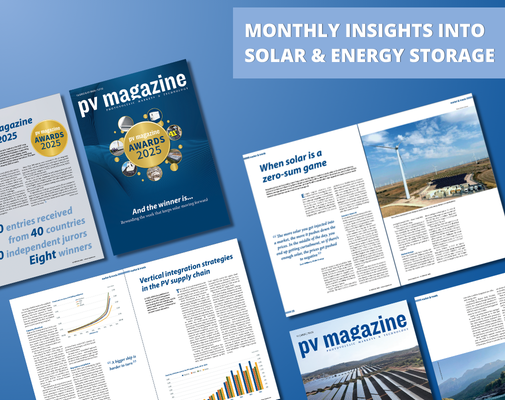
Out now - pv magazine Global March Issue
The new pv magazine Global issue is out now!
Available in print and digital – get your copy today!

Your monthly PV industry update
pv magazine’s global monthly edition offers authoritative reporting, market-driven analysis, and expert perspectives on the technologies, policies, and investments transforming global power systems. Essential reading for professionals navigating a fast-changing energy landscape.
Available in print and digital
Battery Business & Development Forum 2026
Connect with Europe’s energy storage leaders at the Battery Business & Development Forum 2026 in Frankfurt (March 31–April 1) and gain insights into evolving business models, financing strategies, and market trends

SunRise Arabia Clean Energy Conference 2026
Join the 3rd SunRise Arabia Clean Energy Conference on April 22, 2026, in Riyadh to explore how solar PV and energy storage are powering the Kingdom’s growing digital economy — including data centers. Secure your spot at the early-bird rate.

Join our ticketed webinar on April 29, we will unpack the incident in detail and offer practical strategies to prevent the cyberattack.
Regular price: 99.00 EUR net.

Special Edition KEY Rimini 2026
On the occasion of KEY Rimini 2026, pv magazine is publishing a special edition on the latest developments in the Italian photovoltaic market.
Content available in Italian.

pv magazine Focus 2026
On 24 June, pv magazine Focus 2026 delivers expert insights on bankable BESS projects and optimized energy management for residential and C&I applications across Europe.
Sign up for our free pv magazine newsletters
With our free daily newsletters, you will receive the latest solar and storage news directly in your inbox

Media Kit 2026
Bookings for 2026

Amplify your brand presence with the leading trade media platform for the solar and storage industry.

How perovskite solar cells age under temperature stress

US startup begins manufacturing grid-scale flywheel ESS
Sodium-ion cells launched for energy storage by another Chinese mid-tier battery company
Beware of cleaning photovoltaic panels with dishwashing detergent
UK defining stronger energy cybersecurity rules after Poland attack
Press Releases
Energy Storage Safety Elevated: Sungrow & TÜV Rheinland White Paper Unveiled
Hoymiles Celebrates 10th Anniversary in Brazil with New Office Opening and High-Power MIS-W Pro Microinverter Launc
Anker SOLIX Upgrades X1 Home Storage System with Power Dock Pro — Whole-Home Backup and Third-Party Solar Integration for the Australian Market
Smart Energy, Seamlessly Connected | Deye Residential ESS Achieves Dual Certification for ECHONET Lite & AIF
Opinion & Analysis
Featured
DIY plug-in solar shows $0.65/W potential in US market
Agrivoltaics with trackers, vertical systems offer economic upside
An industry analysis argues that agrivoltaic systems using trackers or vertical designs can outperform conventional solar on both revenues and land use, challenging conclusions from a recent German study.
‘Be kind to yourself and patient with your journey’
This week Women in Solar+ Europe gives voice to Irene Mihai, Policy Director at the Romanian Photovoltaic Industry Association (RPIA). She says her personal experiences show how mentorship, collaboration, and inclusive workplace practices are essential for attracting and retaining talent while empowering the next generation to contribute to a sustainable future.
What are the selling points of marine energy?
Marine energy is renewable and generally predictable. It could thus compensate for the unplanned intermittency of solar and wind generation, its proponents argue. But several challenges still need to be overcome for the energy to become widely used.
Solar generation performance with regional weather conditions deviating from long-term averages
Global solar PV continues its rapid growth, reaching around 650 GW in 2025, with record solar irradiation extremes across regions such as East Asia, India, and Latin America. With current production capacity and emerging technologies like perovskite-silicon tandem modules, PV is poised to surpass all other electricity generation technologies combined by the end of the decade.
Wettest February since 2011 cuts irradiance across most of Australia
In a new weekly update for pv magazine, Solcast, a DNV company, reports that Australia’s wettest February in 15 years produced solar irradiance deficits of 15–30% across the country’s central and eastern regions.
Markets & Policy
Featured
Adani Green commissions 951 MW solar, hybrid capacity in India
Portable data centers target curtailment, grid constraints
Australian startup WinDC has partnered with US-based Armada to deploy modular data centers at renewable energy sites, aiming to reduce curtailment and meet rising demand for energy-intensive computing infrastructure.
Japan’s Kyocera, Cosmo Energy units enter solar, wind PPAs
Kyocera Corporation will begin to supply electricity generated from its solar assets to Cosmo Energy Solutions from next month. It has also entered into a separate power purchase agreement with Cosmo Eco Power for energy generated from a 48 MW wind farm.
Indonesia’s path to 100 GW of solar
A study from the Institute for Essential Services Reform and Indonesia’s Coordinating Ministry for Economic Affairs explores how Indonesia can turn its target of deploying 100 GW of solar from mandate to mobilization.
US ITC opens Section 337 probe into global TOPCon supply chain
The US International Trade Commission (ITC) has opened a Section 337 investigation into tunnel oxide passivated contact (TOPCon) solar cells, modules, panels, and related products following a complaint by First Solar, naming 47 entities across 11 countries as respondents.
The Hydrogen Stream: Capacity outlook grows, deals shift
GlobalData says hydrogen capacity could reach 82.3 million metric tons per annum (mtpa) by 2030, while Topsoe has ended supply agreements with First Ammonia.
Installations
Featured
European prosecutor investigates suspected solar tender fraud in Slovenia
Industry 4.0 technologies raise cyber risks for smart renewables grids
An international research team developed a multi-stage intrusion detection system that uses supervised and unsupervised AI techniques to detect and mitigate cyber threats in smart renewable energy grids. The system can reportedly achieve high accuracy, low false positives, and real-time detection, outperforming traditional intrusion detection system models.
Panasonic debuts propane heat pump for light industrial, multi-residential buildings
Designed for commercial and multi-residential buildings, the Aqua‑G EVO heat pump can replace gas boilers, cascade up to eight units, and integrate with Panasonic’s complete HVAC ecosystem.
Germany classifies cybersecurity threats for energy infrastructure
Germany’s Federal Network Agency will use a new, structured framework developed by Fraunhofer IOSB-AST to classify cybersecurity incidents in the energy sector. The methodology enables comprehensive risk assessments, from initial reports to systemic and economic impacts, supporting consistent evaluation across the entire energy value chain.
Austria deploys 1.63 GW of solar in 2025
Austria’s photovoltaic market slowed in 2025, with around 1,634 MW of new capacity installed, bringing the country’s total PV capacity to approximately 9.9 GW.
Agrivoltaics for turnips
Researchers in Canada found that semi-transparent cadmium telluride and low-transparency crystalline silicon solar panels can boost turnip root and leaf yields in agrivoltaic systems by optimizing light quality, distribution, and heat stress. Their study highlights that PV module type, transparency, and spectral transmission must be carefully matched to plant physiology to maximize both crop productivity and renewable energy generation.
Technology
Featured
Pushing perovskite solar cells to the ultimate thickness limit
Tongwei moves into hybrid heterojunction back contact solar cell technology
Tongwei is partnering with GS-Solar and Golden Solar to develop a large-scale manufacturing facility for hybrid heterojunction back-contact (HBC) solar cells that combine heterojunction passivation, tunneling oxide and polysilicon structures used in TOPCon designs, and the grid-free front-side architecture typical of back-contact technologies.
PV, storage to anchor Ireland’s first co-located data center campus
Due for completion in 2028, the DUB20 data center campus in County Wicklow will feature battery energy storage and solar PV installations capable of generating 6,000 MWh annually. It will be Ireland’s first Green Energy Park, delivered as part of its large energy users action plan (LEAP).
Swedish scientists build bifacial chalcogenide solar cell with 15.1% efficiency
Researchers in Sweden developed a bifacial chalcoprite solar cell using a titanium-doped indium oxide (ITiO) back contact, achieving 68% bifaciality. The device is able to maintain strong front-side performance with around 15% efficiency, 595 mV open-circuit voltage, and 75% fill factor.”
Enphase launches AI home energy management system
Enphase Energy has introduced an AI software platform in Australia and New Zealand that enables homeowners to reduce energy costs, increase clean energy self-consumption, and control key household appliances.
Electrospray cooling can boost PV panel performance with minimal water use
Researchers in Turkey optimized electrospray cooling for PV panels, achieving optimal power output with minimal water use and a compact, energy-efficient setup. Their study identified irradiance, flow rate, voltage, and nozzle distance as ideal parameters.
Manufacturing
Featured
China solar cell prices fall for third consecutive week as upstream costs ease
Hysolar moves to take control of Suntech
Hongyuan Green Energy (Hysolar) says it plans to take control of Wuxi Suntech Solar Power through a court-led restructuring that transfers core assets into a new entity while isolating legacy debt.
Who are the Top 100 PV manufacturers today?
The Terawatt PV 100 ranks the top 100 solar manufacturing companies using a new methodology based on production scale, financial strength, and corporate transparency, with Tongwei leading the Q1 2026 list and most top firms headquartered in China. The analysis highlights increasing global supply-chain scrutiny driven by tariffs and ESG mandates, while also showing rising influence from Indian companies and strong positions for key materials and equipment suppliers.
JinkoSolar achieves 32.76% efficiency in perovskite-TOPCon tandem solar cell
The result was certified by China’s National Photovoltaic Industry Metrology Test Center (NPVM). The cell utilizes a perovskite top device with MBT-ligand-controlled crystallization on a TOPCon silicon bottom cell, achieving a void-free, high-efficiency tandem structure.
SMA Solar Technology confirms wider loss for 2025 on weak PV market
SMA Solar Technology AG says revenue declined slightly and losses widened significantly in 2025 due to weak demand and one-off effects from its restructuring program.
Sekisui-led consortium testing film-type perovskite solar for agrivolatics
A Japanese consortium is piloting agrivoltaics using film-type perovskite solar cells over rice paddies to study energy generation alongside crop production. The three-year project will assess impacts on rice yield, land use, and emissions while testing the technology’s performance and commercial viability.
Energy Storage
Featured
UK’s first community-owned solar battery seeks investors
German pilot shows 700 EVs can provide redispatch services
TransnetBW says its pilot with Octopus Energy shows 700 electric vehicles can deliver grid flexibility within existing redispatch processes, with potential to scale to gigawatt-hour levels.
Croatia to invest €40 million in household solar, batteries, heat pumps
The Croatian government’s latest set of energy support measures includes new financing for residential solar, batteries and heat pumps, expected to support up to 15,000 applications, as well as an extension of existing electricity price subsidies for homeowners.
Energy transitions continue to produce spillover effects despite geopolitical tensions
Accelerating energy transitions in major economies can create positive spillover effects worldwide, even amid geopolitical tensions, with North America and the Eurozone boosting progress in other regions.
Nulite launches PV-driven residential heat pump
The Chinese manufacturer has unveiled a hybrid photovoltaic–geothermal heat pump system that uses solar electricity to directly power the unit, boosting efficiency and self-consumption. The 8–112 kW ground- and water-source system delivers heating, cooling, and domestic hot water with coefficients of performance often exceeding 4–5, while smart controls and the ground loop act as a thermal battery to optimize year-round performance.
Second-life EV batteries approved for data center microgrid expansion
Crusoe and Redwood Energy are scaling a microgrid in Sparks, Nevada, by using repurposed electric vehicle batteries and solar to supply additional modular data centers.