Top News
India’s PV module manufacturing capacity tops 210 GW

UAE installs around 1 GW of solar in 2025
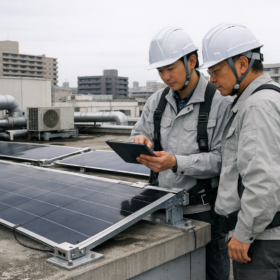
Japan publishes new guidelines for flexible solar cell installations
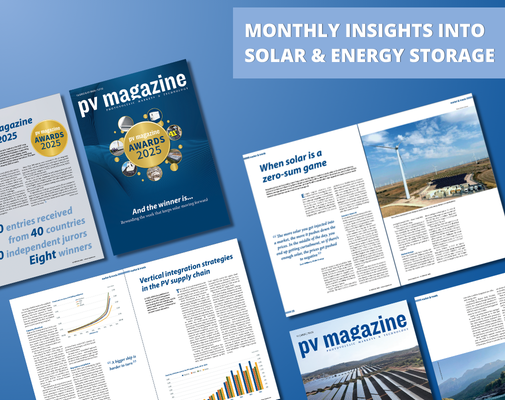
Out now - pv magazine Global March Issue
The new pv magazine Global issue is out now!
Available in print and digital – get your copy today!

Your monthly PV industry update
pv magazine’s global monthly edition offers authoritative reporting, market-driven analysis, and expert perspectives on the technologies, policies, and investments transforming global power systems. Essential reading for professionals navigating a fast-changing energy landscape.
Available in print and digital
Battery Business & Development Forum 2026
Connect with Europe’s energy storage leaders at the Battery Business & Development Forum 2026 in Frankfurt (March 31–April 1) and gain insights into evolving business models, financing strategies, and market trends

SunRise Arabia Clean Energy Conference 2026
Join the 3rd SunRise Arabia Clean Energy Conference on April 22, 2026, in Riyadh to explore how solar PV and energy storage are powering the Kingdom’s growing digital economy — including data centers. Secure your spot at the early-bird rate.

Join our ticketed webinar on April 29, we will unpack the incident in detail and offer practical strategies to prevent the cyberattack.
Regular price: 99.00 EUR net.

pv magazine Webinar
pv magazine Webinar
Special Edition KEY Rimini 2026
On the occasion of KEY Rimini 2026, pv magazine is publishing a special edition on the latest developments in the Italian photovoltaic market.
Content available in Italian.

pv magazine Focus 2026
On 24 June, pv magazine Focus 2026 delivers expert insights on bankable BESS projects and optimized energy management for residential and C&I applications across Europe.
Sign up for our free pv magazine newsletters
With our free daily newsletters, you will receive the latest solar and storage news directly in your inbox

Media Kit 2026
Bookings for 2026

Amplify your brand presence with the leading trade media platform for the solar and storage industry.
South Africa’s largest PV project reaches financial close

China’s new five-year plan deepens shift toward focus on renewables system
2D carbon selenide offers route to competitive sodium-ion batteries
Survey reveals PV systems in Germany outperform lifespan expectations
France selects six operators for PV module recycling capacity
Press Releases
SINEXCEL Recognized as BloombergNEF Tier 1 Power Inverter Manufacturer for Q1 2026
JDEnergy takes the spotlight at Solar Solutions Amsterdam
POWEROAD: Energy, Ideas, and Great Conversations in Lyon, France
ESET Solar Joins United Nations Global Compact, Anchoring Global Expansion in Robust ESG Framework
Opinion & Analysis
Featured
Solar-to-X could redefine Iran’s energy future
Grid-forming BESS set to stabilize Australia’s hyperscale data centers
Australia has become one of the world’s most attractive destinations for hyperscale data centers, ranking among the top five to 10 markets globally by capacity. Drivers include large land availability in Renewable Energy Zones, renewable penetration exceeding 40% across the National Electricity Market (NEM), geopolitical stability, Five Eyes membership, and proximity to Asia-Pacific demand hubs.
Lessons from the solar frontier
Utility-scale solar projects are larger, interconnections are slower, and engineering decisions must anticipate regulation and supply chains years in advance. At the CT Solar Platform in Snyder, Texas – a 1.6 GW AC single-site development – the first phase, CT Solar One (110 MW AC), has served as a test bed for integrating civil design, BOS optimization and domestic-content strategy. Levona Renewables led the development and engineering of the project, and CEO Fernando Queiroz shares key lessons.
‘Even when I sensed bias, I focused on doing my job’
This week Women in Solar+ Europe gives voice to Sabina Blitek, General Counsel at Netherlands’ R.Power Renewables. She says women in male-dominated industries, like energy and finance, can overcome bias by consistently demonstrating competence, believing in their own potential, and leading by example.
Cold, clear skies boost northeastern Europe’s solar while storms dim the west
In a new weekly update for pv magazine, Solcast, a DNV company, reports that February saw a sharp divide in Europe’s solar conditions. Northeastern regions experienced clear, cold weather with irradiance 20% above average, while western and southern Europe endured persistent storms and widespread irradiance deficits.
China polysilicon prices fall over 13% year-to-date as below-cost selling persists
In a new weekly update for pv magazine, OPIS, a Dow Jones company, provides a quick look at the main price trends in the global PV industry.
Markets & Policy
Featured
How EU NIS2 is reshaping physical and cybersecurity for PV plant operators
Samduo launches residential AC-coupled plug-in storage systems
The Chinese manufacturer said its new Nex E6000 and Nex E6000H storage systems combine a 6 kWh battery, an inverter, and an integrated energy management system, with scalable design allowing multiple units to be networked for higher capacity and coordinated energy sharing.
French developer seeks approval for Australia’s largest solar BESS
French renewables developer TE H2 has filed a government application seeking approval for a 2.7 GW solar farm and 6 GWh battery energy storage project to be built in Australia’s Northern Territory.
Advait Greenergy opens 30 MW electrolyzer assembly facility in India
Advait Greenergy has launched a 30 MW electrolyzer assembly facility in Gujarat, India, with plans to scale capacity to 1 GW annually.
Refra debuts water-to-water heat pump for commercial, industrial use
Lithuania-based Refra has launched its Oasis series of water-to-water heat pumps and chillers, offering capacities from 34 kW to 600 kW for small to large commercial and industrial applications. Featuring propane refrigerant, inverter-controlled compressors, and modular multi-circuit design, the units can reach a coefficient of performance of up to 5.1.
US residential solar set for 33% decline in 2026, says Roth Capital Partners
Roth Capital Partners says it expects a sharp drop in US residential solar installations as tax credit changes and Foreign Entity of Concern (FEOC) rules constrain financing.
Installations
Featured
Pexapark registers 30 European PPAs for 2.2 GW in February
Italian solar sector gears up for cybersecurity regulations on PV systems over 100 kW
The Italian energy regulator is requiring PV and wind plants over 100 kW to install central controllers with remote active power control, with staggered compliance deadlines up to 2028. The rules, coupled with rising digitalization, are driving cybersecurity upgrades, AI-based monitoring, and grid-aware operational practices across the renewable energy sector.
India’s 35 GW of renewables at risk of curtailment, warns Crisil Ratings
Crisil Ratings says rapid renewable energy additions and slow grid expansion could expose more than 35 GW of capacity to curtailment in India.
K2 Systems unveils elevated PV mounting solution for metal roofs
The K2 MultiRail High mounting system is a one-piece elevated solution with a height of 100 mm tailored to improve rear ventilation on metal roofs. K2 Systems says greater distance between modules and metal roof surface improves airflow and lowers module temperature, which can translate to higher annual energy yield.
Icelandic utility commissions solar-plus-storage for EV charging
Icelandic utility ON Power has deployed a hybrid solar-plus-storage facility in Reykjavík to support electric vehicle charging infrastructure. The company says it believes such distributed systems will play a growing role in charging infrastructure in the future, even in Iceland’s renewables-dominated power system.
LG debuts new indoor air-to-water heat pumps
The Korean manufacturer has expanded its Therma V R290 heat pump line with three indoor unit options to improve installation flexibility. The new products are designed to deliver heating performance at ambient temperatures as low as -28 C and domestic hot water output of up to 75 C.
Technology
Featured
Discovery of passivating pinholes in TOPCon solar cells paves the way for higher efficiencies
Marstek launches 2 kWh plug-in battery storage system
Marstek has unveiled a plug-in storage system with a two-kilowatt-hour capacity. The device plugs into a standard household socket and is designed to store solar power from balcony systems or draw in cheap electricity from dynamic pricing tariffs.
Fox ESS presents residential storage system line with 89.6% round-trip efficiency
The new series features single- and three-phase systems with scalable LFP battery integration. Designed for rapid whole-house backup and VPP applications, the new product delivers up to 89.6 % round-trip efficiency, according to the manufacturer.
DMEGC launches 475 W full-black solar module
The Chinese manufacturer said its new rooftop solar module offers 455–475 W power, 22.8–23.8% efficiency, 96-cell double-glass design, and IP68 protection.
Ukraine prioritizes solar-plus-storage in renewables auctions
Newly-implemented rules governing Ukraine’s energy market introduce solar-plus-storage systems as a separate auction category, ease regulatory barriers governing standalone storage projects and establish processes for renewable energy facilities located in Ukraine’s occupied territories.
Is Switzerland going back contact?
In 2025, back-contact solar modules from Aiko Solar and Longi accounted for more than 50% of the Swiss market, driven by strong demand for high-efficiency rooftop PV systems, according to a new report by Eturnity and the Bern University of Applied Sciences.
Manufacturing
Featured
RenewSys inaugurates 3 GW solar module plant in India
Dutch startup plans roll-to-roll factory for perovskite solar cells
TNO has launched Perovion Technologies to industrialize lightweight, flexible perovskite solar cells, targeting niche applications where conventional panels are unsuitable. The company plans to build the first roll-to-roll perovskite solar cell manufacturing facility in the Netherlands by 2030.
Arctech presents dry cleaning robot weighing just 38 kg
The Chinese manufacturer said its new Star Shine I system is already available in Europe and can operate at speeds of 10–18 m/min, performing cleaning routes of up to 3 km round trip and 9 km in a single direction.
Ciemat unveils large-area multispectral solar simulator for PV module testing
The system enables measurements under controlled irradiance, spectrum, and temperature conditions. It can combine 0.4% spatial irradiance uniformity, 500 ms illumination pulses, and dynamic I-V acquisition to accurately test high-capacitance photovoltaic modules in a single pulse, according to Ciemat.
Nanostructured silicon could push solar cells beyond Shockley–Queisser limit
The LEEMONS project is researching nanostructured silicon that uses low-energy electron multiplication (LEEM) to allow one high-energy photon to generate multiple electrons, reducing energy losses in solar cells. By creating ultra-thin amorphous silicon layers inside crystalline silicon via ion implantation, the scientists aim to boost solar cell efficiency beyond the Shockley–Queisser limit while keeping compatibility with existing manufacturing methods.
Austria could harness 90 TWh of agrivoltaics using 5–16% of cropland
Austrian researchers conducted a techno-economic analysis of agrivoltaic systems and found that 5%–16% of the country’s cropland would be required to meet its solar electricity targets.
Energy Storage
Featured
Atmoce launches backup box for three-phase emergency power retrofit
New framework promises unprecedented level of cybersecurity for SCADA systems
An international research team developed CyberSentry, a software framework using advanced deep learning and optimization techniques to enhance cybersecurity in SCADA systems for power plants and critical infrastructure. It combines feature selection, hybrid anomaly detection, and dynamic parameter tuning to detect diverse cyberattacks with 99.5% accuracy while minimizing false alarms.
Pii Energy unveils plug-in 1.2 kW solar, 2 kWh home system
US-based Pii Energy has launched a plug-in solar-plus-storage kit designed for renters and apartment residents, priced at about USD 2,400.
The Hydrogen Stream: Atome secures $420 million debt for Paraguay plant
Atome says it has secured a $420 million debt package for a $650 million low-carbon fertilizer project in Paraguay producing 260,000 metric tons (MT) per year, while Asahi Kasei says it has begun installing a 1 MW-class electrolyzer at Finland’s first commercial hydrogen refueling station.
RWE, Peak Energy to deploy first sodium-ion battery in US grid
Peak Energy says it will deploy the first sodium-ion battery in the Midcontinent Independent System Operator (MISO) service area with RWE Americas in eastern Wisconsin, using passively cooled grid-scale storage that cuts auxiliary power use by 90% and lowers lifetime storage costs by $70/kWh.
All 2022–2024 cyberattacks on energy infrastructure at a glance
A new global dataset of 119 energy-sector cyber incidents from 2022–2024 shows EU and BRICS countries, followed by the US, are most affected. Attacks targeted power, oil, gas, and nuclear infrastructure, driven by both financial and political motives, with diverse threat actors involved.