Top News
Slovakia deploys 243 MW of solar in 2025
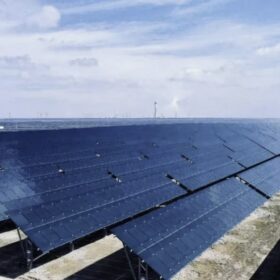
GCL Optoelectronics wins China’s first commercial perovskite-silicon tandem PV module order
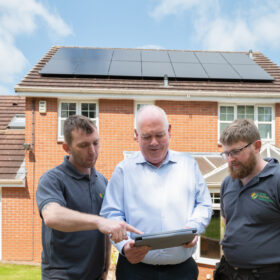
Solar panels and low-carbon heating mandated for new homes in England
Out now - pv magazine Global March Issue
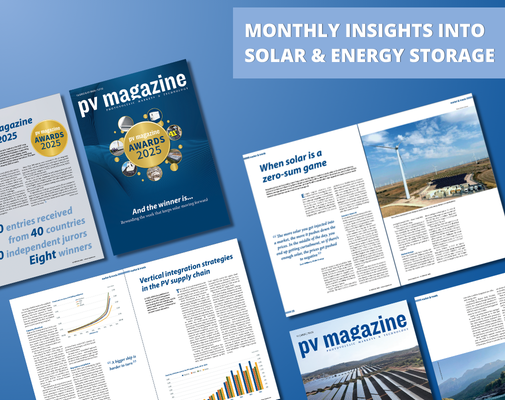
The new pv magazine Global issue is out now!
Available in print and digital – get your copy today!

Your monthly PV industry update
pv magazine’s global monthly edition offers authoritative reporting, market-driven analysis, and expert perspectives on the technologies, policies, and investments transforming global power systems. Essential reading for professionals navigating a fast-changing energy landscape.
Available in print and digital
Battery Business & Development Forum 2026
Connect with Europe’s energy storage leaders at the Battery Business & Development Forum 2026 in Frankfurt (March 31–April 1) and gain insights into evolving business models, financing strategies, and market trends

SunRise Arabia Clean Energy Conference 2026
Join the 3rd SunRise Arabia Clean Energy Conference on April 22, 2026, in Riyadh to explore how solar PV and energy storage are powering the Kingdom’s growing digital economy — including data centers. Secure your spot at the early-bird rate.

Join our ticketed webinar on April 29, we will unpack the incident in detail and offer practical strategies to prevent the cyberattack.
Regular price: 99.00 EUR net.

pv magazine Webinar
Special Edition KEY Rimini 2026
On the occasion of KEY Rimini 2026, pv magazine is publishing a special edition on the latest developments in the Italian photovoltaic market.
Content available in Italian.

pv magazine Focus 2026
On 24 June, pv magazine Focus 2026 delivers expert insights on bankable BESS projects and optimized energy management for residential and C&I applications across Europe.
Sign up for our free pv magazine newsletters
With our free daily newsletters, you will receive the latest solar and storage news directly in your inbox

Media Kit 2026
Bookings for 2026

Amplify your brand presence with the leading trade media platform for the solar and storage industry.

Solar cyber threats expand, but inverters still stay in the crosshairs

Why battery storage is becoming the engine of AI growth
Molecular solar battery stores energy for days, yields hydrogen on demand
Silver prices find new floor around $70 an ounce
PVT-driven tower heat pump for building retrofits
Press Releases
Beyond Green Goals: High-Efficiency Solar Delivers 1.2-Year Payback for Italian Factory
Growatt Enhances Cross-Regional Technical Alignment Through 2026 Global Immersion Program
Sunwoda Receives TÜV Rheinland CE-EMC Compliance Certificate for Its 836kWh Liquid-Cooling ESS at SMART ENERGY WEEK 2026
JinkoSolar Launches LightRoof Lightweight & Anti-glare Modules, 45% Reduction in Weight
Opinion & Analysis
Featured
Why technical due diligence is becoming the backbone of Europe’s solar-storage boom
‘The barriers I encountered were never dramatic, they were cumulative’
This week Women in Solar+ Europe gives voice to Delfina Muñoz, Research Director & Strategic Project Manager at France’s CEA. She says diversity is a catalyst for faster, fairer clean energy innovation. Inclusion, mentorship, and authentic leadership don’t just support people, they build stronger, more resilient teams that power the energy transition forward.
Clean Winter air drives major irradiance surplus across China and Taiwan in February
In a new weekly update for pv magazine, Solcast, a DNV company, reports that February saw a sharp East Asia solar divide, with southern China and Taiwan experiencing record-high irradiance due to clear skies and low aerosols, while maritime Southeast Asia faced heavy rainfall and below-average irradiance from enhanced tropical convection. The surplus in China was driven by atmospheric cleanliness, whereas Taiwan’s boost came mainly from persistently clear days, contrasting with widespread deficits across Indonesia, the southern Philippines, and nearby islands.
China wafer prices unchanged as resumed purchases fail to lift market
In a new weekly update for pv magazine, OPIS, a Dow Jones company, provides a quick look at the main price trends in the global PV industry.
Solar-to-X could redefine Iran’s energy future
Iran is widely known for its oil and gas resources, but its strongest long-term energy asset may be the sun. New research shows how solar PV could drive a cost-competitive transition across power, heat, transport, industry, and desalination, while opening the door to a broader Solar-to-X Economy.
Grid-forming BESS set to stabilize Australia’s hyperscale data centers
Australia has become one of the world’s most attractive destinations for hyperscale data centers, ranking among the top five to 10 markets globally by capacity. Drivers include large land availability in Renewable Energy Zones, renewable penetration exceeding 40% across the National Electricity Market (NEM), geopolitical stability, Five Eyes membership, and proximity to Asia-Pacific demand hubs.
Markets & Policy
Featured
When battery imbalance turns 11% of capacity into stranded energy
Enervest begins building Australia’s largest floating solar array
Melbourne-based renewables developer Enervest has begun construction of a 500 kW floating solar array on a water storage reservoir in Warrnambool, Victoria, which it says will be Australia’s largest floating solar installation on completion.
Solar and wind reach record 17% of US power generation
Combined generation from wind and utility-scale solar reached a record 17% of the US electricity mix in 2025, producing 760,000 GWh, up 88,000 GWh from 2024, according to the US Energy Information Administration (EIA).
Spain completes testing of Europe’s largest research vanadium BESS
Spain’s Fundación Ciudad de la Energía (Ciuden), a government energy research foundation, has completed operational testing of a 1 MW/8 MWh vanadium redox flow battery (VRFB) system at its Cubillos del Sil technology center, which it says is the largest vanadium flow battery in Europe dedicated to applied research.
Stricter rules for energy retailers as UK smart meter deployment slows
UK government plans new obligations for energy suppliers as smart meter deployment slows in Great Britain. Annual additions to smart electricity meter total have fallen each year since 2021. Binding annual milestones expected to come into force from 2027.
European residential heat pump sales increased in 2025
Analysis across 16 European countries finds an around 240,000 increase in the number of residential heat pump sales year-on-year. The European Heat Pump Association attributes the upward trend to governments stabilizing subsidy schemes.
Installations
Featured
When tiny magnets attack PV systems
New solar window concept integrates polymer-dispersed liquid crystal to enable switchable transparency
Researchers in the United Kingdom have developed a smart window that combines switchable polymer-dispersed liquid crystal with integrated PV cells, offering controllable transparency and electricity generation. The system balances light, heat, and solar protection while maintaining high visual quality and stable performance, according to its creators.
Türkiye’s solar capacity surpasses 25 GW
Alparslan Bayraktar, Türkiye’s Minister of Energy and Natural Resources, says 2026 will be a record year for renewables in the country after total deployed solar reached 25,827 MW by the end of January.
German startup offers team of 22 specialized AI workers for PV plant O&M operations
Invertix has launched 22 specialized AI “workers” to automate O&M tasks for renewable energy assets, targeting inefficiencies in data handling, alarm management, and reporting. The startup says its system enables PV plant operators to scale portfolios more efficiently by reducing manual workloads, while keeping humans in the loop for critical decisions.
Fraunhofer CSP warns some cleaning agents may reduce PV module performance by up to 5.6%
Researchers at the German institute found that some widely used PV cleaning agents can damage anti reflective glass coatings, significantly reducing solar module efficiency. Their tests showed that while some cleaners are safe, others cause visible and permanent coating degradation, highlighting the need for careful selection of cleaning products to avoid long term performance loss.
The Hydrogen Stream: Ionautics advances catalyst toward production
Sweden’s Ionautics has advanced its platinum-based hydrogen catalyst toward full-scale industrial production, while thyssenkrupp nucera has signed contracts for 300 MW of alkaline electrolysis capacity in Spain and 260 MW in India.
Technology
Scientists build high temperature-resistant perovskite solar cell with 26% efficiency
Solar key to space-based AI
Elon Musk, the CEO of both Tesla and SpaceX, raised some eyebrows at this year’s World Economic Forum (WEF) in Davos, Switzerland, when he predicted “that the lowest cost place to put AI will be space and that will be true within two to three years, three at the latest.” pv magazine reported on Musk’s vision on our global website www.pv-magazine.com on Jan. 26, 2026, and exactly one week later SpaceX announced that it was acquiring xAI “to form the most ambitious, vertically integrated innovation engine on (and off) Earth, with AI, rockets, space-based internet, direct-to-mobile device communications, and the world’s foremost real-time information and free speech platform.”
Entso-E report finds systemic failures behind 2025 Iberian blackout
The European Network of Transmission System Operators for Electricity (Entso-E) has published its final root cause report on the April 28, 2025, blackout in Spain and Portugal, finding failures across grid operations, generation, and regulations, and issuing 22 recommendations to strengthen European grid resilience.
Solar and the cyber winter
In an interview with pv magazine, cybersecurity expert Roberto Setola describes a structural shift in cyber threats against solar energy infrastructure, where attacks now target peripheral systems like remote terminal units rather than centralized SCADA, often in coordinated campaigns amplified by AI. He also emphasized that the recent cyberattack to PV plants in Poland demonstrated how simultaneous strikes on smaller, less-protected operators can potentially trigger major disruptions, including blackouts, economic losses, and cascading grid risks.
Canadian startup unveils AI tool for solar panel cleaning optimization
Swish Solar has an AI-driven tool that optimizes solar panel cleaning schedules to reduce soiling losses and operating costs. The platform uses data analytics and forecasting models to help operators time cleaning based on financial impact.
Sandia Labs benchmarks PV software providers in first ever blind comparison analysis
Sandia National Laboratories conducted the first-ever blind comparison of seven commercial PV modeling software, revealing that differences in weather handling, system modeling, derates, and assumptions grow as system complexity increases. The study emphasizes that software choice should consider project complexity, workflow, and modeling features rather than relying on rankings alone.
Manufacturing
Featured
Chinese PV Industry Brief: JinkoSolar appoints new CEO
The case for ground-level agrivoltaics
German engineering firm BEC Energie Consult has developed a substructure for low-mounted agrivoltaics designed to provide cost-efficient installation while supporting crop growth and livestock management, with the potential to enhance economic viability.
Iran conflict stirs solar demand debate in Germany
Germany’s solar sector is reporting a surge in inquiries following the military escalation between Israel, the United States, and Iran, with E.ON citing a doubling of demand for solar installations. Other industry participants are more cautious, attributing much of the increase to seasonal patterns rather than geopolitical anxiety.
Low new module prices stall growth in secondary solar market
Data from EnergyBin and Buckstop shows used solar modules made up just 1% of resale listings in 2025, as falling prices for new panels weaken reuse economics.
India extends solar manufacturing mandate to wafers and ingots
India’s Ministry of New and Renewable Energy (MNRE) has expanded its Approved List of Models and Manufacturers (ALMM) framework to include solar ingots and wafers, with mandatory compliance for new project bids taking effect from June 1, 2028.
New PV inverter efficiency metric reflects local solar conditions
Researchers in Brazil have developed a weighted PV inverter efficiency methodology that accounts for country-specific solar irradiance and operating conditions. The approach is designed to address the limitations of international metrics by incorporating variables such as input voltage and maximum power point tracking (MPPT) performance.
Energy Storage
Featured
Ghana plans to procure 200 MW of battery storage
Brazil’s LRCAP battery auction demand estimated at nearly 3 GW
Brazil’s second Long-term Reserve Capacity Auction (LRCAP) of 2026 has contracted 501 MW of thermoelectric capacity, leaving an estimated 3 GW of remaining demand to be addressed in a forthcoming battery storage auction expected later this year.
Why BESS insurers are sweating transformers and contractor errors over battery fires
The BESS insurance risk profile is shifting. In an exclusive interview, Tokio Marine GX underwriter Michael Carrington explains why insurers are looking past battery fires and sweating over supply chain bottlenecks, high-voltage transformers, and costly EPC integration errors.
Key takeaways from Solar Solutions Amsterdam
The fourteenth edition of Solar Solutions Amsterdam showcased the latest technologies across solar, storage, electric vehicle charging and green HVAC. This year saw energy storage systems dominate the show floor, ahead of the event’s rebrand to Sustainable Solutions Amsterdam from next year onwards, reflecting the Dutch market’s position as a mature market increasingly focused on flexibility and the connectivity of different technologies within a single system.
Advansor unveils scalable CO2 heat pump for large-scale heating needs
The Danish company said its configurable CO2 system delivers up to 4.8 MW per unit and is scalable to 50 MW for large industrial and commercial projects. The units offer hot water output of up to 95 C and compatibility with complex installations such as food processing, district heating, and commercial buildings.
Edify Energy awards EPC contracts for 1.8 GW of solar and storage in Australia
Edify Energy will start construction proper of two massive solar and battery energy storage projects in Queensland, Australia, by mid-year after naming DT Infrastructure as its preferred engineering, procurement and construction (EPC) contractor.