Top News
US ITC opens Section 337 probe into global TOPCon supply chain
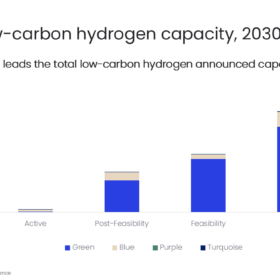
The Hydrogen Stream: Capacity outlook grows, deals shift
China PV Industry Brief: China adds 32.48 GW solar as polysilicon prices fall
Out now - pv magazine Global March Issue
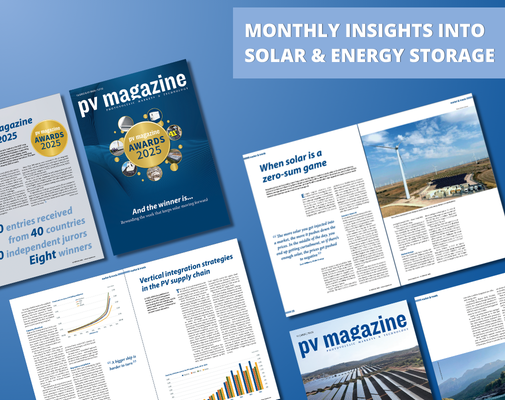
The new pv magazine Global issue is out now!
Available in print and digital – get your copy today!

Your monthly PV industry update
pv magazine’s global monthly edition offers authoritative reporting, market-driven analysis, and expert perspectives on the technologies, policies, and investments transforming global power systems. Essential reading for professionals navigating a fast-changing energy landscape.
Available in print and digital
Battery Business & Development Forum 2026
Connect with Europe’s energy storage leaders at the Battery Business & Development Forum 2026 in Frankfurt (March 31–April 1) and gain insights into evolving business models, financing strategies, and market trends

SunRise Arabia Clean Energy Conference 2026
Join the 3rd SunRise Arabia Clean Energy Conference on April 22, 2026, in Riyadh to explore how solar PV and energy storage are powering the Kingdom’s growing digital economy — including data centers. Secure your spot at the early-bird rate.

Join our ticketed webinar on April 29, we will unpack the incident in detail and offer practical strategies to prevent the cyberattack.
Regular price: 99.00 EUR net.

Special Edition KEY Rimini 2026
On the occasion of KEY Rimini 2026, pv magazine is publishing a special edition on the latest developments in the Italian photovoltaic market.
Content available in Italian.

pv magazine Focus 2026
On 24 June, pv magazine Focus 2026 delivers expert insights on bankable BESS projects and optimized energy management for residential and C&I applications across Europe.
Sign up for our free pv magazine newsletters
With our free daily newsletters, you will receive the latest solar and storage news directly in your inbox

Media Kit 2026
Bookings for 2026

Amplify your brand presence with the leading trade media platform for the solar and storage industry.
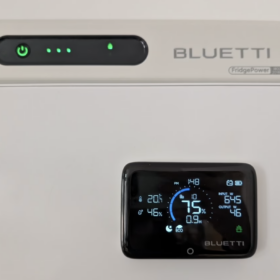
Bluetti targets home backup with fridge-focused battery system

European prosecutor investigates suspected solar tender fraud in Slovenia
Brazil PV module imports fall 24% to 17.9 GW in 2025
Industry 4.0 technologies raise cyber risks for smart renewables grids
Swedish scientists build bifacial chalcogenide solar cell with 15.1% efficiency
Press Releases
Sungrow’s SHT Hybrid Inverter Wins World’s First VDE-AR-N 4105:2026 Certification
AlphaESS Hosts Energy Ignite Party in South Africa
Jinko ESS Secures Strategic Cooperation Agreement for 1GWh Energy Storage Projects in Latin America
Rising Prices, Rising Risks, Energy Uncertainty in Europe: How Battery Storage Can Stabilize Costs and Boost Resilience
Opinion & Analysis
Featured
Agrivoltaics with trackers, vertical systems offer economic upside
‘Be kind to yourself and patient with your journey’
This week Women in Solar+ Europe gives voice to Irene Mihai, Policy Director at the Romanian Photovoltaic Industry Association (RPIA). She says her personal experiences show how mentorship, collaboration, and inclusive workplace practices are essential for attracting and retaining talent while empowering the next generation to contribute to a sustainable future.
What are the selling points of marine energy?
Marine energy is renewable and generally predictable. It could thus compensate for the unplanned intermittency of solar and wind generation, its proponents argue. But several challenges still need to be overcome for the energy to become widely used.
Solar generation performance with regional weather conditions deviating from long-term averages
Global solar PV continues its rapid growth, reaching around 650 GW in 2025, with record solar irradiation extremes across regions such as East Asia, India, and Latin America. With current production capacity and emerging technologies like perovskite-silicon tandem modules, PV is poised to surpass all other electricity generation technologies combined by the end of the decade.
Wettest February since 2011 cuts irradiance across most of Australia
In a new weekly update for pv magazine, Solcast, a DNV company, reports that Australia’s wettest February in 15 years produced solar irradiance deficits of 15–30% across the country’s central and eastern regions.
China solar cell prices fall for third consecutive week as upstream costs ease
In a new weekly update for pv magazine, OPIS, a Dow Jones company, provides a quick look at the main price trends in the global PV industry.
Markets & Policy
Featured
Inland Rail deploys solar-powered level crossings in Australia
UK’s first community-owned solar battery seeks investors
Low Carbon Hub plans to add battery energy storage system (BESS) to existing solar plant. The developer is offering shares in what’s thought to be the first community-owned co-located battery in the United Kingdom.
Panasonic debuts propane heat pump for light industrial, multi-residential buildings
Designed for commercial and multi-residential buildings, the Aqua‑G EVO heat pump can replace gas boilers, cascade up to eight units, and integrate with Panasonic’s complete HVAC ecosystem.
Enphase launches AI home energy management system
Enphase Energy has introduced an AI software platform in Australia and New Zealand that enables homeowners to reduce energy costs, increase clean energy self-consumption, and control key household appliances.
California bill targets DER access to resource adequacy market
California Senator Josh Becker says proposed legislation would require regulators to allow distributed energy resources (DERs), including batteries and electric vehicles, to participate in the state’s grid reliability market.
Germany classifies cybersecurity threats for energy infrastructure
Germany’s Federal Network Agency will use a new, structured framework developed by Fraunhofer IOSB-AST to classify cybersecurity incidents in the energy sector. The methodology enables comprehensive risk assessments, from initial reports to systemic and economic impacts, supporting consistent evaluation across the entire energy value chain.
Installations
Featured
Austria deploys 1.63 GW of solar in 2025
Agrivoltaics for turnips
Researchers in Canada found that semi-transparent cadmium telluride and low-transparency crystalline silicon solar panels can boost turnip root and leaf yields in agrivoltaic systems by optimizing light quality, distribution, and heat stress. Their study highlights that PV module type, transparency, and spectral transmission must be carefully matched to plant physiology to maximize both crop productivity and renewable energy generation.
UK solar deployment hits 22 GW as more large projects commissioned
Government data reveals 2.5 GW of new solar added in 12-months period, the fastest pace for a decade. Deployment expected to accelerate as pipeline of utility-scale projects grows and subsidy support for residential installations kicks in.
Croatia to invest €40 million in household solar, batteries, heat pumps
The Croatian government’s latest set of energy support measures includes new financing for residential solar, batteries and heat pumps, expected to support up to 15,000 applications, as well as an extension of existing electricity price subsidies for homeowners.
Nulite launches PV-driven residential heat pump
The Chinese manufacturer has unveiled a hybrid photovoltaic–geothermal heat pump system that uses solar electricity to directly power the unit, boosting efficiency and self-consumption. The 8–112 kW ground- and water-source system delivers heating, cooling, and domestic hot water with coefficients of performance often exceeding 4–5, while smart controls and the ground loop act as a thermal battery to optimize year-round performance.
Saudi Arabia adds around 7.8 GW of solar in 2025
Saudi Arabia had a record year for solar deployment last year, taking cumulative capacity past 12.4 GW. GlobalData is forecasting annual deployments to increase in the coming years but notes that they remain behind the pace required to meet the country’s target of 130 GW of renewables by 2030, instead nearing the goal by 2035.
Technology
Featured
Electrospray cooling can boost PV panel performance with minimal water use
German pilot shows 700 EVs can provide redispatch services
TransnetBW says its pilot with Octopus Energy shows 700 electric vehicles can deliver grid flexibility within existing redispatch processes, with potential to scale to gigawatt-hour levels.
Who are the Top 100 PV manufacturers today?
The Terawatt PV 100 ranks the top 100 solar manufacturing companies using a new methodology based on production scale, financial strength, and corporate transparency, with Tongwei leading the Q1 2026 list and most top firms headquartered in China. The analysis highlights increasing global supply-chain scrutiny driven by tariffs and ESG mandates, while also showing rising influence from Indian companies and strong positions for key materials and equipment suppliers.
JinkoSolar achieves 32.76% efficiency in perovskite-TOPCon tandem solar cell
The result was certified by China’s National Photovoltaic Industry Metrology Test Center (NPVM). The cell utilizes a perovskite top device with MBT-ligand-controlled crystallization on a TOPCon silicon bottom cell, achieving a void-free, high-efficiency tandem structure.
Energy transitions continue to produce spillover effects despite geopolitical tensions
Accelerating energy transitions in major economies can create positive spillover effects worldwide, even amid geopolitical tensions, with North America and the Eurozone boosting progress in other regions.
Spain enables 50-plus renewable plants for real-time voltage control
Spain’s grid operator Red Eléctrica and regulator CNMC have launched real-time voltage control services, allowing renewable energy installations to provide dynamic grid support under a new regulatory framework.
Manufacturing
Featured
Hysolar moves to take control of Suntech
SMA Solar Technology confirms wider loss for 2025 on weak PV market
SMA Solar Technology AG says revenue declined slightly and losses widened significantly in 2025 due to weak demand and one-off effects from its restructuring program.
Sekisui-led consortium testing film-type perovskite solar for agrivolatics
A Japanese consortium is piloting agrivoltaics using film-type perovskite solar cells over rice paddies to study energy generation alongside crop production. The three-year project will assess impacts on rice yield, land use, and emissions while testing the technology’s performance and commercial viability.
Smart meters are vulnerable gateways to cyberattacks
Researchers found that widely deployed smart meters pose a “massive” cybersecurity risk, potentially enabling data manipulation, energy theft, and service disruption. They propose a new detection method using state estimation and statistical boundaries to more accurately identify cyberattacks, outperforming traditional techniques despite higher computational demands.
Perovskite solar cells can be made without expensive cleanrooms
Swansea University researchers found that perovskite solar cells can tolerate dusty fabrication environments, performing almost as well as those made in cleanrooms. The findings suggest low-cost, scalable production may be possible without ultra-sterile conditions, potentially accelerating cell and module manufacturing.
Waaree approves INR 39 billion solar glass factory investment
Waaree Energies has approved a capital expenditure of INR 39 billion ($415 million) to build a solar glass manufacturing facility with a capacity of 2,500 metric tons (MT) per day through its subsidiary Waaree Green Glass.
Energy Storage
Featured
Second-life EV batteries approved for data center microgrid expansion
US installs record 18.9 GW of energy storage in 2025
The United States added 18.9 GW of energy storage capacity in 2025, a 52% increase year on year, according to Wood Mackenzie.
France proposes linking solar subsidies to storage as prices turn negative
France’s energy regulator plans to link PV support to storage as negative power prices increase and reduce solar revenues.
Solar cyber threats expand, but inverters still stay in the crosshairs
In an interview with pv magazine, Jay Johnson, the CTO of US-based cybersecurity firm DERSec, explains that PV systems face cybersecurity risks that extend far beyond inverters, as demonstrated by a December attack on Polish solar plants where wiper malware targeted substation equipment rather than the inverters themselves. Vulnerabilities often lie in backhaul communication channels like APIs and mobile apps, making layered defenses, network segmentation, and vigilant monitoring essential to safeguard distributed energy resources.
Why battery storage is becoming the engine of AI growth
Data centers are using batteries to run more AI on the same grid connection.
PVT-driven tower heat pump for building retrofits
Researchers in China demonstrated that integrating energy tower heat pumps with evaporator-side boilers, air-source heat pumps, or solar-assisted systems can significantly improve winter heating efficiency and economic performance in commercial buildings. Among the four configurations tested, the evaporator-side boiler and solar-assisted systems delivered the highest performance and energy savings, offering a sustainable, low-carbon alternative to conventional heating.