Top News
Trina Solar, JA Solar, JinkoSolar launch China’s first PV patent pool for TOPCon technologies

Thermoacoustic heat pumps on the verge of commercial breakthrough
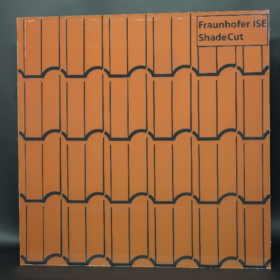
Fraunhofer ISE develops colored film tech for patterned solar modules
Out now - pv magazine Global April Issue
The new pv magazine Global issue is out now!
Available in print and digital – get your copy today!

pv magazine Awards 2026
It’s time to submit your application!
Entries for the pv magazine Awards 2026 are now open from April 1 to August 31 across seven key categories: Modules, Inverters, BESS, BoS, Sustainability, Manufacturing, and Projects.
Don’t miss your chance to showcase your innovation globally.
Your monthly PV industry update
pv magazine’s global monthly edition offers authoritative reporting, market-driven analysis, and expert perspectives on the technologies, policies, and investments transforming global power systems.
Available in print and digital

Join our ticketed webinar on April 29, we will unpack the incident in detail and offer practical strategies to prevent the cyberattack.
Regular price: 99.00 EUR net.

pv magazine Webinar
pv magazine Webinar
pv magazine Webinar
pv magazine Webinar
Special Edition KEY Rimini 2026
On the occasion of KEY Rimini 2026, pv magazine is publishing a special edition on the latest developments in the Italian photovoltaic market.
Content available in Italian.
pv magazine Focus 2026
On 24 June, pv magazine Focus 2026 delivers expert insights on bankable BESS projects and optimized energy management for residential and C&I applications across Europe.
Sign up for our free pv magazine newsletters
With our free daily newsletters, you will receive the latest solar and storage news directly in your inbox

Media Kit 2026
Bookings for 2026

Amplify your brand presence with the leading trade media platform for the solar and storage industry.
Long-duration battery storage can contribute to security of supply more cost-effectively than gas-fired power plants, LCP Delta finds
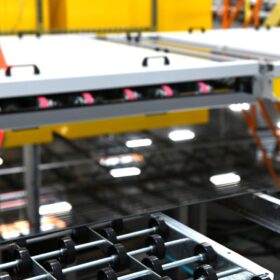
Manufacturing partnership brings new PV technology to U.S.-sourced solar
Inside PV Manufacturing: Belga Solar’s module factory in Belgium
Forecasting solar irradiance in urban environments with just one 360° image
Zendure launches battery series for residential PV
Press Releases
Intersolar Mexico presents its strategic leadership group, key to anticipating the direction of the Mexican energy sector
Water Governance for Green Development: WHES and Gezhouba Ecological Environmental Protection Launch Energy Storage Transformation Across Seven Sewage Treatment Plants in Hunan Province
Deye Showcases Comprehensive Energy Storage Solutions at Canton Fair
TCL Solar Highlights Groundbreaking Solar Products at Korea Green Energy Expo 2026
Opinion & Analysis
Featured
Solar delivers where wind and hydro falter
Solar and wind take over global power growth in 2025
In 2025, solar and wind dominated global energy growth, delivering around six times more new capacity than all other power sources combined and supplying nearly all new electricity demand. With rapid expansion led by countries like Australia and several European nations, solar and wind are now the fastest-growing and central drivers of the global energy transition.
Sun’s out, load’s gone: The evolution of Australia’s National Electricity Market
Q4 2025 in South Australia saw grid-connected loads with spot price exposure actually being paid to use electricity about half the time (46%) – and that electricity was overwhelmingly (80%) supplied by renewables. This demonstrates a shift from managing demand to quietly needing it. Particularly in regions like South Australia, there is growing demand for demand.
Will we finally buy European PV modules?
In a new monthly column for pv magazine, the Becquerel Institute explains why Europe’s solar manufacturing outlook is shifting from decline to cautious opportunity, driven by rising energy uncertainty and new regulations like the Net-Zero Industry Act that create fragmented, nationally defined markets with partial protection for domestic producers. While demand and policy support are strong, complexity, uneven implementation, and competition risks mean success will depend on how quickly and strategically industry players navigate this narrow window.
‘I approach inclusion from a perspective of fairness and performance’
This week Women in Solar+ Europe gives voice to Carla Vico, CEO of France’s Green Solver. She says building an inclusive culture means valuing people for their work, accountability, and commitment, rather than their gender or background. “I do not believe in positive discrimination; I believe in creating equal opportunities and making merit-based decisions,” she states.
China polysilicon hits cost floor as producers curb output amid weak demand
In a new weekly update for pv magazine, OPIS, a Dow Jones company, provides a quick look at the main price trends in the global PV industry.
Markets & Policy
Featured
EU responds to energy price shocks with ‘homegrown’ clean energy push
Dutch buildings could host 36 GW of façade solar capacity
A new report from the Netherlands Enterprise Agency (RVO) estimates that building façades could offer up to 36 GW of technical solar PV potential, representing a significant but largely untapped resource. However, high costs, regulatory complexity, and lower performance compared to rooftop systems limit widespread adoption, currently making façade PV a niche solution for specific building types.
U.S. court blocks ‘de facto moratorium’ on federal solar permitting
A U.S. federal judge has issued a preliminary injunction against a Department of the Interior policy that required Trump-appointed Secretary of the Interior Doug Burgum’s approval for all renewable energy projects on public lands, effectively stalling tens of gigawatts of capacity.
Solar leads Ireland’s home energy upgrade grant scheme in 2026
Ireland recorded more than 10,000 applications for solar PV as part of its home energy upgrade program from January to March 2026, an increase of 65% on the same period for last year.
German utility deploying 30 MW heat pump for district heating
Enercity has begun constructing a 30 MW wastewater-based heat pump in Hanover as part of its shift away from coal-based district heating, replacing capacity from the Stöcken coal plant alongside biomass, power-to-heat, and waste-heat systems.
Repowering key for Japanese solar assets approaching feed-in tariff expiry
The refinancing of GSSG Solar and Voltaiyo’s 104 MW Jupiter Portfolio comes as Japan’s first-generation feed-in tariff (FIT) projects approach the end of guaranteed rates, forcing owners to reassess revenue strategies in a shifting post-FIT market.
Installations
Featured
Multi-pyranometer tech improves solar irradiance measurements in the Arctic
First PV plant operating in Poland’s balancing market
The 204 MW Zwartowo solar power plant is the first large-scale solar project authorized to provide balancing services in Poland.
Abaxx Exchange lists world’s first solar irradiance futures contract
The Enwex Germany Solar (GSM) contract, launching April 23, brings exchange-cleared solar irradiance hedging to a market that has until now operated largely over the counter (OTC), a development Munich Re’s weather derivatives team says could broaden participation and formalize risk management.
Peru opens complementary services market to support renewables
Peru’s energy ministry has proposed market-based reforms for complementary electricity services to improve grid stability amid rising solar and wind generation.
Botswana breaks ground on 500 MW solar-plus-storage project
The Maun solar project will encompass 500 MW of solar tied to 500 MWh of battery storage in northeastern Botswana, making it one of the largest projects of its kind in southern Africa. A 30-year power purchase agreement is in place between project developers Okavango Solar, wholly-owned by Oman’s NAQAA Sustainable Energy LLC, and Botswana Power Corporation.
Work begins on Zambia’s largest solar-plus-storage project
Globeleq has started construction on 250 MW solar farm connected to 150 MW/600 MWh of battery storage in Zambia’s Lusaka Province.
Technology
Featured
Rethinking silver paste design for TOPCon, LECO solar cells
No evidence of PFAS leaching from solar panels, study finds
Researchers in the United States reviewed claims about PFAS in solar panels and found that while fluoropolymers may be used in limited components like backsheets or coatings, there is no confirmed evidence of PFAS leaching from commercially deployed modules. The study highlights widespread confusion between different PFAS types and emphasizes the need for clearer communication and transparency around fluoropolymer use in PV technologies.
SolarEdge targets C&I with new all-in-one battery
SolarEdge has a new commercial focused battery system, with the new model scaling up to as high as 1 MW / 4 MWh depending on the inverter choice.
Maldives’ largest floating solar array goes online
Swimsol says the 2.4 MW floating PV array will supply the resort island of Cheval Blanc Randheli, reducing diesel consumption and saving about $1.5 million in fuel costs. The company’s engineering team told pv magazine how the system will operate.
U.S. startups announce partnership to offer domestic perovskite-silicon tandem solar modules
Solx and Caelux said they will supply 3 GW of Solx Aurora modules, which combine domestic silicon cells from Suniva and a top layer of Caelux “Active Glass” to reach 28% efficiency, with commercial volumes available in the U.S. market by 2027.
A closer look at EcoFlow’s three-phase Ocean 2 storage solution
Ocean 2 brings a more versatile large-scale and expandable, modular home storage solution, capable of handling both small and large solar PV input.
Manufacturing
Featured
Inside PV Manufacturing: United Solar’s polysilicon factory in Oman
Fabricating perovskite solar cells with robotic boxes
An international research team has developed an AI-driven robotic platform that autonomously designs, fabricates, and optimizes perovskite solar cells, completing the full experimental workflow in a closed-loop system. Using the platform, the researchers fabricated and tested more than 50,000 devices, achieving efficiencies of up to 27%.
Tandem PV launches commercial perovskite-silicon manufacturing in California
Tandem PV has opened a 40 MW commercial demonstration factory in Fremont, California, marking a significant transition for perovskite-silicon technology from laboratory development to repeatable manufacturing at scale.
TBEA launches 500 kW string inverter
The new inverter is designed around standardized 5 MW and 5.5 MW PV sub-arrays with the aim to reduce balance-of-system costs. It features a maximum efficiency of 99.0% and a high-voltage architecture of up to 1,600 Vdc and 1,000 Vac.
JinkoSolar debuts rooftop PV module weighing 7 kg/m2
The Chinese manufacturer said its lightweight Light Diamond TOPCon module delivers 560 W at 24.94% efficiency.
Cyber threats for PV: What are supply chain attacks and how do they work
Supply chain attacks compromise PV systems by targeting trusted vendors, software, or hardware components, allowing attackers to infiltrate systems indirectly through legitimate channels. These attacks can disrupt operations, introduce hidden vulnerabilities, and impact multiple assets at once, making vendor security and system validation critical for resilience.
Energy Storage
Featured
The world added 605 GW of new PV capacity in 2025, says IEA
How to operate PV-driven residential heat pumps under time-varying tariffs
Researchers in the United Kingdom developed a scheduling model for residential heat pumps that reduces electricity costs while maintaining thermal comfort under dynamic tariffs and uncertain rooftop PV generation. It optimizes when to use grid power, PV energy, and building thermal storage.
Rongke Power debuts 2 MW/8 MWh vanadium flow battery storage system
The Chinese company says the new product targets long-duration storage, grid support, and GWh-scale deployment.
Control, not capacity, could be the next driver of US residential storage investment
Investors are shifting focus from deployment growth to platforms that can orchestrate and monetize battery fleets.
California powers its massive water pumps with 105 MW solar project
California is putting the sun to work on the heavy lift that keeps California hydrated.
Jinko Power enters data center business with 1 GW project in China
Jinko Power signed a framework agreement with Zhongwei to develop a 1 GW data center in Ningxia, marking its entry into green computing under China’s “Eastern Data, Western Computing” initiative. The project, however, remains subject to approvals and funding scrutiny.