Top News
Fraunhofer CSP warns some cleaning agents may reduce PV module performance by up to 5.6%

Solar key to space-based AI
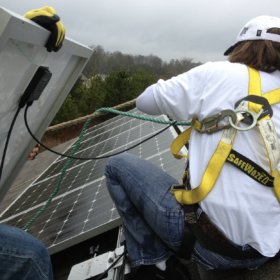
SiteCapture launches AI tool to automate solar field documentation
Out now - pv magazine Global March Issue
The new pv magazine Global issue is out now!
Available in print and digital – get your copy today!

Your monthly PV industry update
pv magazine’s global monthly edition offers authoritative reporting, market-driven analysis, and expert perspectives on the technologies, policies, and investments transforming global power systems. Essential reading for professionals navigating a fast-changing energy landscape.
Available in print and digital
Battery Business & Development Forum 2026
Connect with Europe’s energy storage leaders at the Battery Business & Development Forum 2026 in Frankfurt (March 31–April 1) and gain insights into evolving business models, financing strategies, and market trends

SunRise Arabia Clean Energy Conference 2026
Join the 3rd SunRise Arabia Clean Energy Conference on April 22, 2026, in Riyadh to explore how solar PV and energy storage are powering the Kingdom’s growing digital economy — including data centers. Secure your spot at the early-bird rate.

Join our ticketed webinar on April 29, we will unpack the incident in detail and offer practical strategies to prevent the cyberattack.
Regular price: 99.00 EUR net.

pv magazine Webinar
Special Edition KEY Rimini 2026
On the occasion of KEY Rimini 2026, pv magazine is publishing a special edition on the latest developments in the Italian photovoltaic market.
Content available in Italian.

pv magazine Focus 2026
On 24 June, pv magazine Focus 2026 delivers expert insights on bankable BESS projects and optimized energy management for residential and C&I applications across Europe.
Sign up for our free pv magazine newsletters
With our free daily newsletters, you will receive the latest solar and storage news directly in your inbox

Media Kit 2026
Bookings for 2026

Amplify your brand presence with the leading trade media platform for the solar and storage industry.
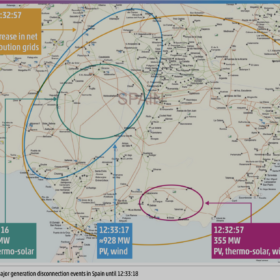
Entso-E report finds systemic failures behind 2025 Iberian blackout
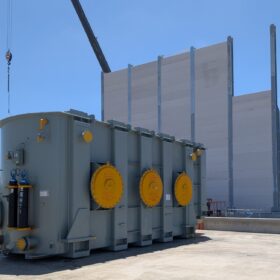
Why BESS insurers are sweating transformers and contractor errors over battery fires
The Hydrogen Stream: Ionautics advances catalyst toward production
Solar and the cyber winter
Chinese PV Industry Brief: JinkoSolar appoints new CEO
Press Releases
Sunwoda Highlights ESG Leadership and Digital Battery Passport at Energy Storage Summit Australia 2026
JinkoSolar Unveils Five Star Fire Resistant Modules, Raising The Bar for PV Fire Safety with Cutting-Edge Flame-Retardant Technology
Sineng Electric Supports Commissioning of Tanzania’s First Utility-Scale Grid-Connected Solar Power Station
Growatt Launches “Smiles Behind Every Kilowatt” Engineers Initiative to Celebrate Global Installation and Service Professionals
Opinion & Analysis
Featured
Why technical due diligence is becoming the backbone of Europe’s solar-storage boom
‘The barriers I encountered were never dramatic, they were cumulative’
This week Women in Solar+ Europe gives voice to Delfina Muñoz, Research Director & Strategic Project Manager at France’s CEA. She says diversity is a catalyst for faster, fairer clean energy innovation. Inclusion, mentorship, and authentic leadership don’t just support people, they build stronger, more resilient teams that power the energy transition forward.
Clean Winter air drives major irradiance surplus across China and Taiwan in February
In a new weekly update for pv magazine, Solcast, a DNV company, reports that February saw a sharp East Asia solar divide, with southern China and Taiwan experiencing record-high irradiance due to clear skies and low aerosols, while maritime Southeast Asia faced heavy rainfall and below-average irradiance from enhanced tropical convection. The surplus in China was driven by atmospheric cleanliness, whereas Taiwan’s boost came mainly from persistently clear days, contrasting with widespread deficits across Indonesia, the southern Philippines, and nearby islands.
China wafer prices unchanged as resumed purchases fail to lift market
In a new weekly update for pv magazine, OPIS, a Dow Jones company, provides a quick look at the main price trends in the global PV industry.
Solar-to-X could redefine Iran’s energy future
Iran is widely known for its oil and gas resources, but its strongest long-term energy asset may be the sun. New research shows how solar PV could drive a cost-competitive transition across power, heat, transport, industry, and desalination, while opening the door to a broader Solar-to-X Economy.
Grid-forming BESS set to stabilize Australia’s hyperscale data centers
Australia has become one of the world’s most attractive destinations for hyperscale data centers, ranking among the top five to 10 markets globally by capacity. Drivers include large land availability in Renewable Energy Zones, renewable penetration exceeding 40% across the National Electricity Market (NEM), geopolitical stability, Five Eyes membership, and proximity to Asia-Pacific demand hubs.
Markets & Policy
The case for ground-level agrivoltaics
Key takeaways from Solar Solutions Amsterdam
The fourteenth edition of Solar Solutions Amsterdam showcased the latest technologies across solar, storage, electric vehicle charging and green HVAC. This year saw energy storage systems dominate the show floor, ahead of the event’s rebrand to Sustainable Solutions Amsterdam from next year onwards, reflecting the Dutch market’s position as a mature market increasingly focused on flexibility and the connectivity of different technologies within a single system.
Iran conflict stirs solar demand debate in Germany
Germany’s solar sector is reporting a surge in inquiries following the military escalation between Israel, the United States, and Iran, with E.ON citing a doubling of demand for solar installations. Other industry participants are more cautious, attributing much of the increase to seasonal patterns rather than geopolitical anxiety.
Morocco finally unlocks solar self‑consumption
Morocco has published the implementing decree for Law 82‑21, enabling self-producers to consume their own solar power and sell up to 20% of surplus energy back to the grid. The measure, effective 9 June 2026, sets clear tariffs and grid limits.
Greece receives 12.2 GW of merchant battery applications for 4.7 GW program
Investors have submitted applications for 12.15 GW of utility-scale, standalone merchant battery storage projects in Greece, far exceeding the 4.7 GW the country plans to approve. But with wrestling over financing and key policy details still unresolved, the path to construction remains unclear.
Advansor unveils scalable CO2 heat pump for large-scale heating needs
The Danish company said its configurable CO2 system delivers up to 4.8 MW per unit and is scalable to 50 MW for large industrial and commercial projects. The units offer hot water output of up to 95 C and compatibility with complex installations such as food processing, district heating, and commercial buildings.
Installations
Featured
Canadian startup unveils AI tool for solar panel cleaning optimization
Sandia Labs benchmarks PV software providers in first ever blind comparison analysis
Sandia National Laboratories conducted the first-ever blind comparison of seven commercial PV modeling software, revealing that differences in weather handling, system modeling, derates, and assumptions grow as system complexity increases. The study emphasizes that software choice should consider project complexity, workflow, and modeling features rather than relying on rankings alone.
Panasonic claims world’s first trial of cybersecurity monitoring for grid-scale BESS
A Japanese joint-pilot will test grid-scale BESS with a range of local and remote attack vectors, with cybersecurity monitoring to watch for indications of anomalies.
Japan sets FIT terms for small PV, rooftop solar as large-scale auctions end
The Japanese government has set 2026 feed-in tariff (FIT) terms for solar below 250 kW, set the renewable energy levy at JPY 4.18 ($0.026)/kWh, and confirmed that feed-in premium (FIP) auctions for large-scale solar will end after 2026.
Pakistan’s solar boom is bigger than official data shows
Pakistan’s Renewables First has explored the implications of a lack of official data collection from the country’s distributed solar market segment, which is estimated to have reached over 24 GW of installed capacity by the middle of last year.
Japan finances 130 MW solar project in Tunisia
The latest round of Japan’s carbon financing program, which provides financial support for low-carbon infrastructure projects in partner countries, is backing a 130 MW solar project being built in southeastern Tunisia.
Technology
Featured
Spanish researchers develop ultra-thin solar cells for any surface
New PV inverter efficiency metric reflects local solar conditions
Researchers in Brazil have developed a weighted PV inverter efficiency methodology that accounts for country-specific solar irradiance and operating conditions. The approach is designed to address the limitations of international metrics by incorporating variables such as input voltage and maximum power point tracking (MPPT) performance.
What happens when malware hits PV systems
A random malware variant affected about 800 remote monitoring devices at ground-mounted PV plants in Japan in May 2024. Tokyo-based cybersecurity firm Girasol Energy has told pv magazine what happened and how PV asset owners can protect themselves against such incidents.
EPFL, CSEM achieve world record efficiency of 30.02% in perovskite-silicon triple-junction solar cell
An international research team boosted triple-junction solar cell performance by enhancing perovskite crystal growth, increasing middle-cell light absorption, and adding reflective nanoparticles.
Thermochromic bifacial PV glazing system for reducing building cooling loads
Researchers in Hong Kong Hong Kong fabricated a thermochromic bifacial photovoltaic glazing system prototype that passively regulates solar heat gain while harvesting energy from both sides. Experiments and simulations showed it significantly reduces cooling loads and indoor temperatures while boosting electricity generation.
Ariston launches residential propane heat pump with built-in PV function
The Italian heating solutions provider said its new Nuos Plus S2 Wi-Fi heat pump system offers up to 80% energy savings and a coefficient of performance of up to 3.51.
Manufacturing
Featured
Low new module prices stall growth in secondary solar market
India extends solar manufacturing mandate to wafers and ingots
India’s Ministry of New and Renewable Energy (MNRE) has expanded its Approved List of Models and Manufacturers (ALMM) framework to include solar ingots and wafers, with mandatory compliance for new project bids taking effect from June 1, 2028.
SolarEdge launches Nexis hybrid inverter and high-voltage battery for residential PV
The Nexis solution combines a flexibly configurable hybrid inverter with a modular high-voltage battery offering up to 14 kW charging capacity per stack. The inverter delivers 8–20 kW AC power, supports up to 200% DC oversizing, and features IP65-rated design with integrated backup power.
Solarium commissions 1 GW solar module plant in India
Rooftop solar company Solarium Green Energy has commissioned a 1 GW solar module manufacturing facility in Ahmedabad, Gujarat, producing large-format G12 modules up to 725 Wp and serving both internal and external customers.
India’s PV module manufacturing capacity tops 210 GW
India added 119 GW of solar module capacity and over 9 GW of cell capacity in 2025, bringing total capacities to about 210 GW and 27 GW, respectively, according to Mercom India. Growth was driven by strong project demand and policy support, although supply-demand alignment is expected later in 2026 as domestic cell production ramps up.
Japan publishes new guidelines for flexible solar cell installations
Japan’s New Energy and Industrial Technology Development Organization (NEDO) says its new design and construction guidelines for flexible PV and perovskite solar installations will help ensure the safety and reliability of systems deployed on low-load rooftops and wall surfaces where conventional panels cannot be installed.
Energy Storage
Featured
Edify Energy awards EPC contracts for 1.8 GW of solar and storage in Australia
Scientists demonstrate quantum battery prototype with rapid charging
Scientists from Australia’s Commonwealth Scientific and Industrial Research Organisation (CSIRO), RMIT University and the University of Melbourne have developed a quantum battery prototype that demonstrates rapid, scalable energy storage using collective quantum effects.
On-site batteries accelerate grid access for data center developers
Battery energy storage systems (BESS) are increasingly used in uninterruptible power supply (UPS) applications for data centers and to speed grid connections, offering services beyond what gas turbines can provide, including emerging approaches such as bring your own capacity (BYOC) and flexible grid connections (FGC).
Japanese firm GBP launches fencing for solar and BESS sites
GBP K.K., a Japan-based clean energy infrastructure company, has launched perimeter fencing systems for grid-scale solar and battery energy storage system (BESS) sites, targeting security in difficult terrain and noise mitigation near residential areas.
2D carbon selenide offers route to competitive sodium-ion batteries
Researchers at TU Delft propose using 2D carbon selenide as a sodium-ion battery anode, offering a theoretical capacity of 589 mAh/g with minimal volume expansion. Computational studies confirmed the material’s structural and thermal stability, as well as tunable electrochemical properties, making it a promising candidate for large-scale, renewable-linked energy storage.
How EU NIS2 is reshaping physical and cybersecurity for PV plant operators
The European Union’s NIS2 Directive is pushing PV operators to strengthen both cyber and physical security, treating solar assets as critical infrastructure. It also highlights the need for stronger physical protection measures, such as site surveillance, access control, and perimeter security to prevent tampering and intrusion.